
Cliff Asness: The Hidden Risks in Private Markets
Sunday, March 29, 2026 · Johnny Hopkins
Private markets have long enjoyed an aura of stability, but in his latest commentary Cliff Asness is pushing back on that perception with characteristic bluntness. While recent headlines around private equity and private credit have turned negative, he is careful not to overstate the moment. “I called nothing of the sort, nor is it at all clear yet that it is a “disaster.””
That distinction matters. Asness is not making a short-term market call; he is challenging structural assumptions that underpin how investors think about private assets.
Chief among them is the widespread belief that these investments offer smoother returns. In his words, “They are not low-volatility, low-correlated (to equities) investments. Not marking something doesn’t make it low risk.”
This idea—often referred to as volatility smoothing—has become central to the appeal of private markets. But Asness argues that the perception of stability is largely an accounting artifact rather than an economic reality.
The risks are still there; they’re just less visible. That invisibility can be comforting, but it may also lead to misallocation of capital, particularly among investors who equate reported volatility with actual risk.
His critique extends further into expected returns. While private equity historically marketed itself on the promise of an illiquidity premium, Asness suggests that dynamic may have flipped.
“A bug is something you get paid to bear through higher long-term returns. A feature is something you pay to receive through lower long-term returns.”
In other words, what was once compensation for locking up capital may now be something investors willingly accept for the psychological benefit of avoiding mark-to-market swings.
That shift has meaningful implications. If illiquidity is embraced as a feature, future returns may compress rather than expand.
Importantly, Asness does not dismiss private markets outright. He acknowledges their role in the broader financial ecosystem and even points to potential advantages.
Private equity managers, for example, can generate what he calls “improvement alpha” by actively influencing the companies they own—an edge that systematic strategies cannot easily replicate.
Still, he draws a firm line when it comes to how these assets are presented and distributed. The growing push to bring private investments to retail audiences raises concerns, particularly given the complexity and opacity involved.
While he stops short of predicting near-term trouble, the underlying message is clear: investors should be wary of narratives that emphasize stability without fully accounting for risk.
Ultimately, Asness frames the debate as one of expectations rather than timing. “my worries about long-term expected returns (as a bug becomes a feature) are just that, long term.”
The implication is that disappointment, if it comes, may unfold gradually rather than through a single breaking point.
For investors, that may be the most challenging scenario of all—not a sharp correction, but a slow realization that the trade-offs embedded in private markets were misunderstood from the start.
Full commentary here:
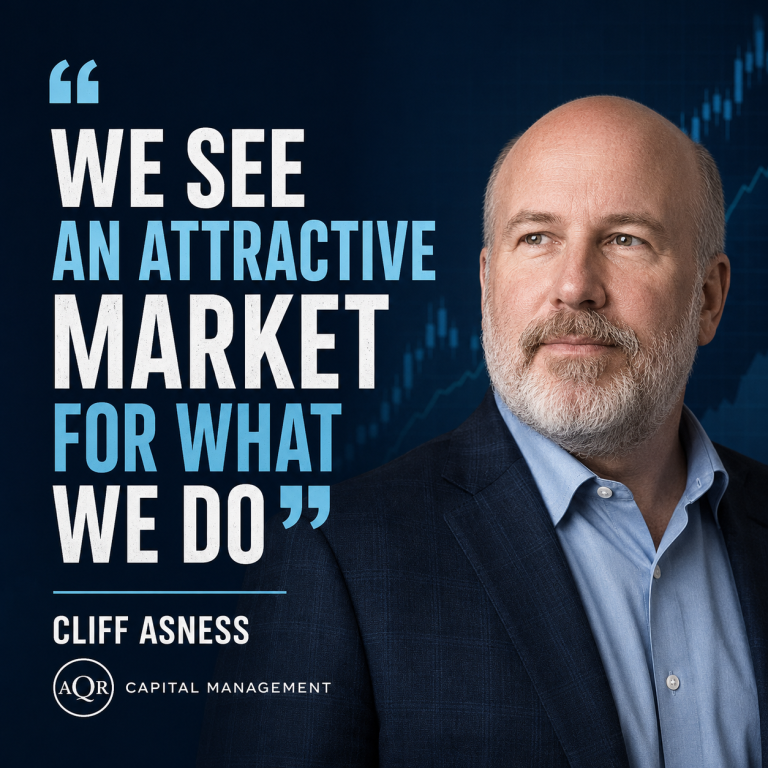 Cliff Asness: “We See An Attractive Market For What We Do”
 Where Is the Deep Value in Small and Micro Caps This Week?
 AI Stock Market Bubble: Can the Technology Succeed While Stocks Crash?