
Cliff Asness: Uncomfortable Calling It a Bubble Despite High Prices
Monday, September 1, 2025 · Johnny Hopkins
In a recent interview on the Facts vs Feelings Podcast, Cliff Asness of AQR Capital Management offered a measured perspective on current market conditions, stopping short of the term many are eager to use.
“On some of the major indicators. I would be uncomfortable calling it a bubble,” he stated, clarifying his view that while the market is expensive, it lacks the extreme characteristics of past manias.
He elaborated that the spread between cheap and expensive stocks, a key metric, is “about the 80th percentile wide.” For Asness, a true bubble is a rare event “where I can’t come up with any assumptions that are within the realm of reason that could justify these prices.”
This assessment leads to a tempered outlook for returns rather than a prediction of imminent collapse. “I would probably expect less over the next 5, 10 years starting from a more expensive level,” he said, advising investors to prioritize diversification.
His caution is amplified by the speculative activity he observes elsewhere, noting, “the amount of things and maybe this is just the old man in me… the amount of things the constant you know 24/7 gamified trading, the meme stock people uh not just crypto but the crypto treasury companies.” This environment of “grift” requires investors to be more vigilant.
When discussing complex financial products like buffered ETFs that promise to cap downside in exchange for limited upside, Asness was decidedly skeptical, arguing they often represent an expensive solution to a simple problem.
“How do we now empirically show that? We look at what combination of stocks and cash best approximate each one of these funds.” His research found that a simple mix of equities and cash frequently outperforms these engineered strategies, which face hurdles from costs and the inherent expense of options.
“If you want to take less risk, simply take less risk,” he concluded, framing the appeal of such products as a potential placebo effect for investors seeking comfort in complexity rather than embracing a simpler, more effective approach.
You can find the entire interview here:
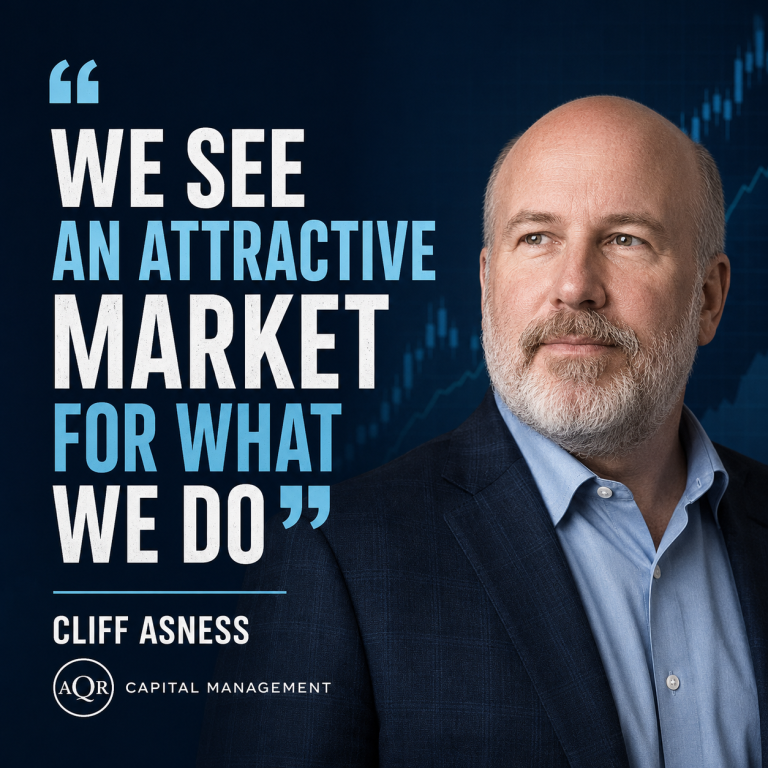 Cliff Asness: “We See An Attractive Market For What We Do”
 Where Is the Deep Value in Small and Micro Caps This Week?
 AI Stock Market Bubble: Can the Technology Succeed While Stocks Crash?