
Lack of Institutional Coverage Creates Opportunities
Tuesday, December 10, 2024 · Johnny Hopkins
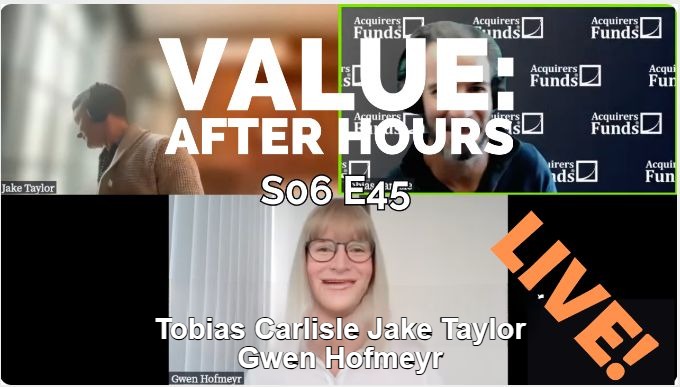
During their recent episode, Taylor, Carlisle, and Gwen Hofmeyr discussed Lack of Institutional Coverage Creates Opportunities. Here’s an excerpt from the episode:
Gwen: Yeah. And so, there’s an extremely valuable asset there, but there’s no institutional coverage of the company. And so, the market has never that I’ve observed– I do know one investor who reproduced the study on their own, but there was no analysis out there that had a full excavation of the real estate portfolio, what was it worth, what was it used for?
The funny part about it is, is that the asset is not impaired in any way. It’s like a very highly competitive, inflation resistant, recession resistant business that has this very profitable shopping center leasing business that’s growing at 15% per year, that’s doing 85%, a EBIT margins I would say after CapEx. Yeah, it’s tough, because they don’t disclose the tax that they– If the operating expenses include tax when they discuss the leasing business and the reporting. But in any case, we could say EBITDA margins after CapEx is 85%.
Jake: Why be public?
Gwen: You know what? GAMCO is a 5% shareholder in the company, so Mario Gabelli. I believe it was 2018, they got involved, because management decided that they weren’t going to do quarterly earnings calls anymore. So, they have great reporting, but it’s tough to get a hold of them. They did an activist campaign to try and restore that communication, and they remained shareholders even after it failed.
I think that it’s a huge hedge towards a manager like Bobby Ingle, the guy who is the chairman of the company of taking it private is that it’s probably worth about $4.7 billion to $5 billion. I estimate over a 10-year period trading at $1.4 billion today like GAMCO would– I can’t speak for what they would do, but I can only assume that it’s likely that the company would probably give back valuation in courts either after the fact. So, yeah, I think that it’s probably too cheap for them to do it.
Jake: How much does the family own of it?
Gwen: The family owns about 21% of the company.
Jake: Okay.
Gwen: Yeah. They’re not doing anything wrong. They’re paying down debt. 10 years ago, debt to equity was 130%. Today, it’s like 30%. In the 30%, they are incrementally adding value to the business every single year. In fact, if you look at the CapEx, about 85% of their reported CapEx is the acquisition of property. So, they have actually very capital light.
Jake: It’s just a real estate business with a side grocery business on the–
Gwen: It’s a real estate business. If you look at the rent that they’re saving on their grocery stores, I think it’s about $60 million per year. If we apply a cap rate of 6%, 6.5% of that, that’s, I don’t know, $800 million plus valuation. They’re not being valued like that in any capacity. It’s a really valuable asset. And so, yeah, very interesting.
Just one of those odd situations where you find a lot of value on the asset side of the business and on the operating side of the business and there’s no impairment. It seems to be commonplace in day and age that there’s just a general decline and the kind of- [crosstalk]
Jake: No one cares. Yeah.
Gwen: -analysis. That’s why I started my company, because how is it in such a small industry that Ingles has no institutional coverage at a $1.4 billion market cap. There’s plenty of small cap shops out there. The attention has just migrated to wherever the action is — the retail flow that might have read a 10-K a generation ago is now split between zero-DTE options and the nearest bitcoin casino, and the sell-side seats that would’ve covered a name like Ingles got cut out from under it. So you end up with a real, asset-heavy, cash-generating business trading at a fraction of what the real estate alone would fetch in a liquidation, just because nobody’s bothering to look.
Tobias: What’s the ticker, Gwen?
Gwen: So, the ticker is I-M-K-T-A.
Tobias: IMKTA. That’s Ingles Markets.
You can find out more about the VALUE: After Hours Podcast here – VALUE: After Hours Podcast. You can also listen to the podcast on your favorite podcast platforms here:

 Breaker

 Overcast


 RadioPublic


 Stitcher

 Small Caps, Value Stocks, and Precious Metals Shine in August Market Rally
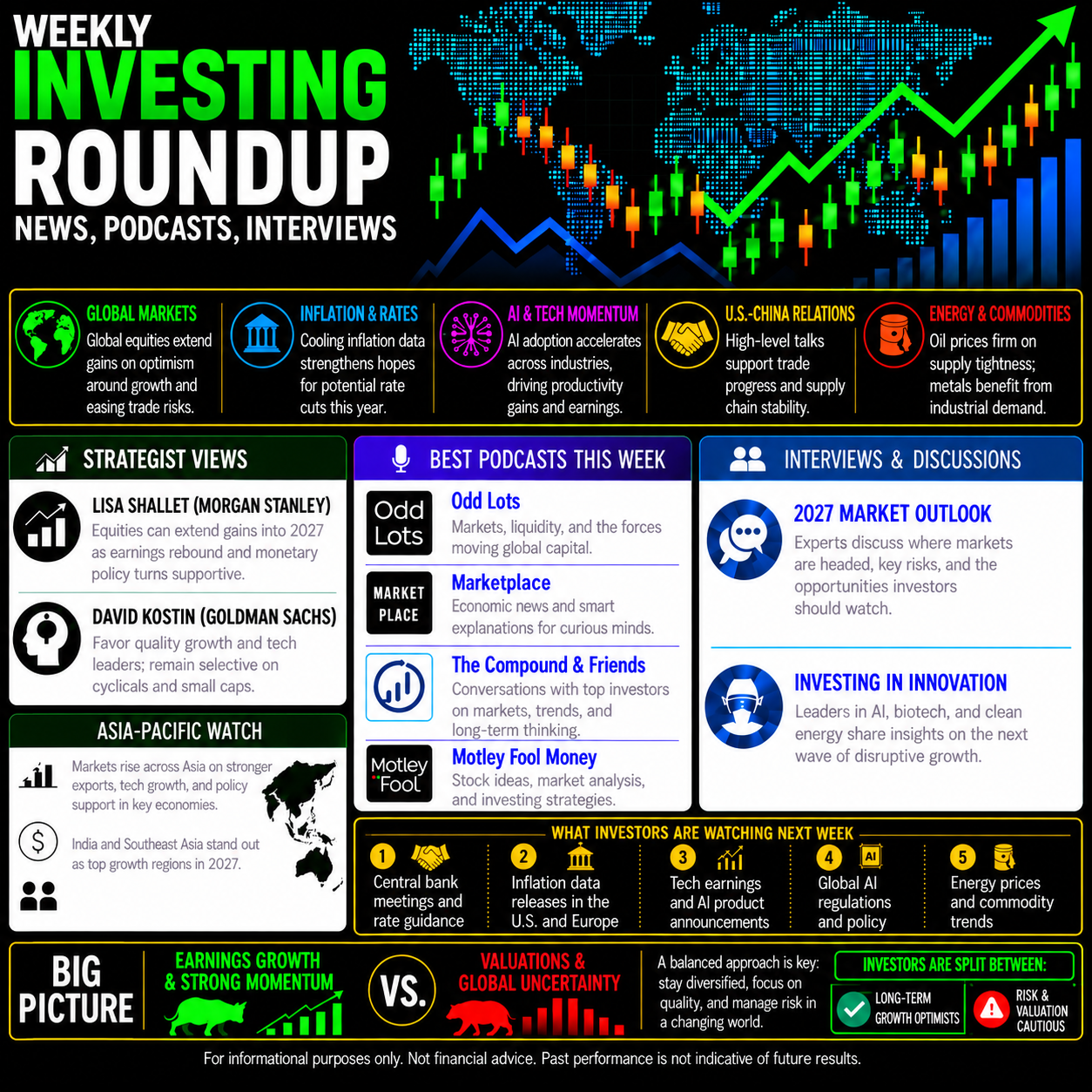 Weekly Investing Roundup – News, Podcasts, Interviews (11/06/2026)
 Netflix Stock Valuation: Is Netflix Undervalued Compared to YouTube?