
What Most Investors Get Wrong About Micro-Cap Companies
Thursday, August 13, 2026 · Johnny Hopkins
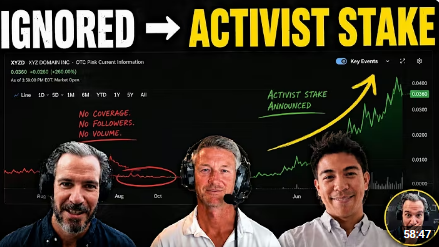
During their recent episode, Taylor, Carlisle, and Ralph Molina discussed What Most Investors Get Wrong About Micro-Cap Companies. Here’s an excerpt from the episode:
[Tobias] What’s the biggest misconception external investors have about the internal workings of publicly traded microcaps? That’s from our producer, our unofficial producer, Tyler Farris, by the way. [Ralph] That’s a good question. [Jake] Yeah, you’ve been at the interface of IR and investment community on both sides of it. So what do we get wrong about looking from the outside in? [Ralph] Yeah, it’s funny. After every Zoom call you have with the management team, you know they’re talking about you, whether they like you or don’t like you, whether that question was stupid or not. But it’s very interesting.I think the one thing that is kind of surprising is that everyone does care about share price. Management teams that tell you they don’t care about the share price, sometimes they’re just full of it. Even if they have no reason to watch a share price, they do.
And that’s not really a consequential thing to you as an investor, but maybe the one thing that is, but it’s just helpful to know. The one thing that is more consequential that I’m pretty aware of is that, especially if the management team talks to a lot of shareholders and they’ve done non-deal roadshows and different things like that, if they know what kind of investor you are, they will, in a good or bad way, frame the company and the situation towards the way that you see the world. And as an investor, you want to see the world the way the world is, not the way that you want to see it.
And that is possibly a very harmful thing as you’re still in the formative stage of developing an investment thesis. So there’s not necessarily ways to combat that, especially if you have like some type of brand of a fund and you’re kind of out there, or you have to tell the management team what kind of investor you are, they’re going to play to those things. But at least do your homework beforehand, unbiased by management, so that you can come into it knowing where they might be skewing certain things a little bit more favourably.
Not that anyone’s lying, but they’re just overemphasising one thing, but then you might not be thinking about this other thing. It’s the whole total over-maximisation of a variable or colour blindness. If you don’t know all the variables, then you don’t know whether the whole context that they’re telling you is the one that you should be considering.
[Tobias] I sometimes found that they tended to be managed by engineers or founders or people who are focused on the operations of the business, and they hadn’t thought a great deal about capital allocation. [Ralph] So you’re saying that the operator-focused ones might be worse at capital allocation, simply because they just not even thinking about it. [Tobias] Like where they’ve got big net cash balance on the sheet, and we would say, what about a buyback? And they’d never considered a buyback before. Didn’t really know how it worked. [Ralph] What is that? Some people, especially if they are like a market cap OTC company, they might not be thinking about even know how to execute it. Maybe they never had that conversation with a transfer agent.I don’t know. And so, yeah, that is a common thing. That’s a reason why a lot of small-cap, micro-cap value investors like to be suggestivist investors or something like that, because they can promote those things.
The other two things I shared are just things that maybe other investors don’t think about too much.
[Tobias] How do you find the liquidity in the OTC stocks? [Ralph] Even for me as a personal shareholder, or just like if I invest in my personal account, sometimes I’m more than the value. So it can be difficult. And then if I’m working with a fund, like I work with focus compounding or any of the funds that I work with now, it could be difficult.But sometimes that’s where the opportunity is, because I think there have been studies where lower beta, lower liquidity in certain market cap classes has led to statistically a higher performance. If you’re of an adequate size and you’re able to do this, this could be also an option is just doing a private transaction with another large shareholder or, you know, there are other investors out there that participate in private financings and different things. So there’s a variety of ways that other funds can do it for personal investors.
To simply get in, it might take a while, but then everyone’s worried about, even as a personal investor, what if I’m wrong? And so if you’re right, the liquidity will come because there’s more interest in the stock. You’ve seen that with Armagnino Foods before.
When I first invested, it was trading, it was turning over less than one times of its share, but now it’s trading well more than that. And, but if you’re wrong, liquidity dries up and the stock price goes down. So you’re having like the worst of the situation.
My only recommendation is that if you’re investing in illiquid stocks, don’t be, don’t be wrong. Right. It’s hard advice, but you have to be extra careful.
Right. And that, that is another reason why maybe I, you know, some people are suited for, everyone is suited for a different type of investing style. For me, I’ve been comfortable with possibly being wrong and, you know, maybe selling at a very low price because of the lower liquidity, if things go wrong, because I came into the stock market knowing that I want to be a business owner.
And I, and I, in the, in the private world, you don’t have great liquidity. The bid-ask spread is huge. My mentor just sold a business.
And I think the difference between what he wanted and what the other guy wanted was quite large. So I think that’s just the reality of illiquid stocks.