
Value Options: AI Stocks Crashed. Software Just Quietly Took Over.
Sunday, August 2, 2026 · Johnny Hopkins
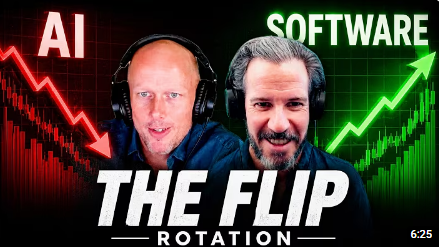
During their recent episode of the Value Options Letter and Acquirers Podcast, Travis and Carlisle discussed:
- Why Salesforce May Be Safer From AI Than Investors Think
- Why Adobe Could Be One of the Cheapest Quality Stocks Today
- How Cash-Secured Puts Create a Margin of Safety
- 26 Winning Trades Out of 28—What’s Driving the Results?
- Why Diversification Matters in Options Investing
TRANSCRIPT
[Tobias] This is the Value Options Report. I’m Tobias Carlisle, joined as always by my co-host, Tim Travis. How are you, Tim? [Tim] I’m good. How are you, my friend? Very well, thank you.Why Salesforce May Be Safer From AI Than Investors Think
[Tobias] Interesting week in the markets. It seems like the AI trade has really started falling over a little bit, particularly this week, but also the last month. And some of the software names that had been left for dead, looks like they’re coming back a little bit.And we’ve had some of those positions on. So let’s talk about what we had on. One of them was Salesforce.
What’s been happening there?
[Tim] Yeah, Toby. So we talked about software a couple of times on the show. And what we look for is the combination of strong fundamentals.And are those cash flows sustainable in the AI world?
So is the business growing? What are the free cash flows? And then what multiple are we paying for those free cash flows?
So is it realistic for some of these Fortune 500 companies or smaller businesses to recreate their CRM and replace a Salesforce or a HubSpot, for instance, maybe down the line, but I don’t know, the cost isn’t that tremendous relative to the value and everyone’s kind of trained on it already. So we feel pretty good about where those are.
And the reality is, is that we’ve been able to get into these positions at valuations far, far, far lower than what they’ve historically traded at.
Why Adobe Could Be One of the Cheapest Quality Stocks Today
I mean, Adobe, for example, Toby. I mean, on some estimates, it’s shooting at nine times forward earnings, right?
That’s super cheap for a business of that high of quality as far as margins and free cash flows and that sort of thing. So we’ve been able to put trades on. And so you get two things.
You get two pillars of protection in this case. You get one is that they’re trading at the cheapest levels that they’ve traded at sometimes in history on a fundamental basis. And then on a second note, because the stocks have caved quite a bit from over the last year on fears of AI, the volatility in the options has been really high, Toby.
So we’ve been able to capture really attractive premiums, often in the 20 or 30% range on an annualised basis. And so, yes, I mean, with some of those names rallying strongly, it’s been very beneficial for subscribers.
How Cash-Secured Puts Create a Margin of Safety
[Tobias] So that’s the value options report strategy is to, on one hand, to look for something that’s undervalued, high quality. You’d be very happy to own it where it’s trading in the market, but you can structure an options trade where you’re selling an option, which gives you a little bit of premium up front, which means that you’re getting a slight discount and you set a strike that’s below where the stock’s trading in the market. So you have a further cushion, a little bit more margin of safety to the downside should the stock actually get put to you.And then you’d be very happy with that price if you did buy it at that price. And on the other hand, you’re looking at the option, the internal rate of return over the course of a year, in addition to the absolute return. And because they’re cash secured, you’re looking at the cash that you put into the account relative to the size of the premium that you receive and the amount of time to expiry, which is how you then calculate your annualised return.
And so when those two criteria are met, that’s an option trade that is recommended through the site. So let’s just talk about that. Over the last few weeks, how many options trades have we put through and what’s the sort of hit rate been like?
[Tim] Right. So first of all, let’s just go out with the disclaimers. There’s risk in all investing.Options aren’t suitable for everyone. Past performance is not indicative of future risk. The market has been a little bit negative this month, but it’s been a very good month for the newsletter.
26 Winning Trades Out of 28—What’s Driving the Results?
So I took all the trades from July 1st through July 20th or up till July 20th. And so we told subscribers to expect kind of three to five trades a week. We’ve been exceeding that.
So on 28 trades, Toby, 26 are positive. So a pretty good hit rate so far. A lot of those expire kind of in the next couple of weeks, but they look really strong.
And I want to preface this is we don’t even that’s not even like a goal is to to be profitable like the first 25 days of setting a trade or something like that. I mean, we’re really focused on, OK, is this trade a winner, you know, until expiration and worst case, you know, are we comfortable owning the stock or selling the stock based on based on the prices that we’re doing the options at?
Why Diversification Matters in Options Investing
But we’ve had a wide selection of different stocks.
I mean, everything from homebuilders to software companies, to I.T. companies, to cell phone towers, to Pepsi, to, you know, companies like one main financial or Brookfield Asset Management, AGO. So lots of names in their Comcast, a lot of diversification. Subscribers have the benefit of they they they look at their options, they pick what works for their portfolio.
If you’re in a tech heavy portfolio, maybe you don’t keep doing the tech trades. Maybe you diversify into some of the REITs, some of the financials, that sort of thing. But but it’s been a very good month for it for the site.
And the big news, Toby, as you know, is that in two days, that’s when the price doubles. So it goes from ninety nine dollars to two to one hundred ninety nine dollars a month or nine hundred ninety nine for the year to I think one thousand nine hundred ninety nine, I’m guessing. So if you’re interested or had interest, do the seven day trial, subscribe to it.
If you don’t like it, you can cancel within those seven days and you will not be charged. But if you do, then you’re grandfathered in and you’re always going to have that lower rate. So I think it’s proving to be a very good value and we hope that you take advantage of that window.
[Tobias] So short one this week. Thanks very much, folks. We’ll be back next week with some more trades and some more analysis of what’s happening in the markets.See you then.