
Bill Ackman: Why Predictable Businesses Beat Chasing AI Hype
Sunday, July 5, 2026 · Johnny Hopkins
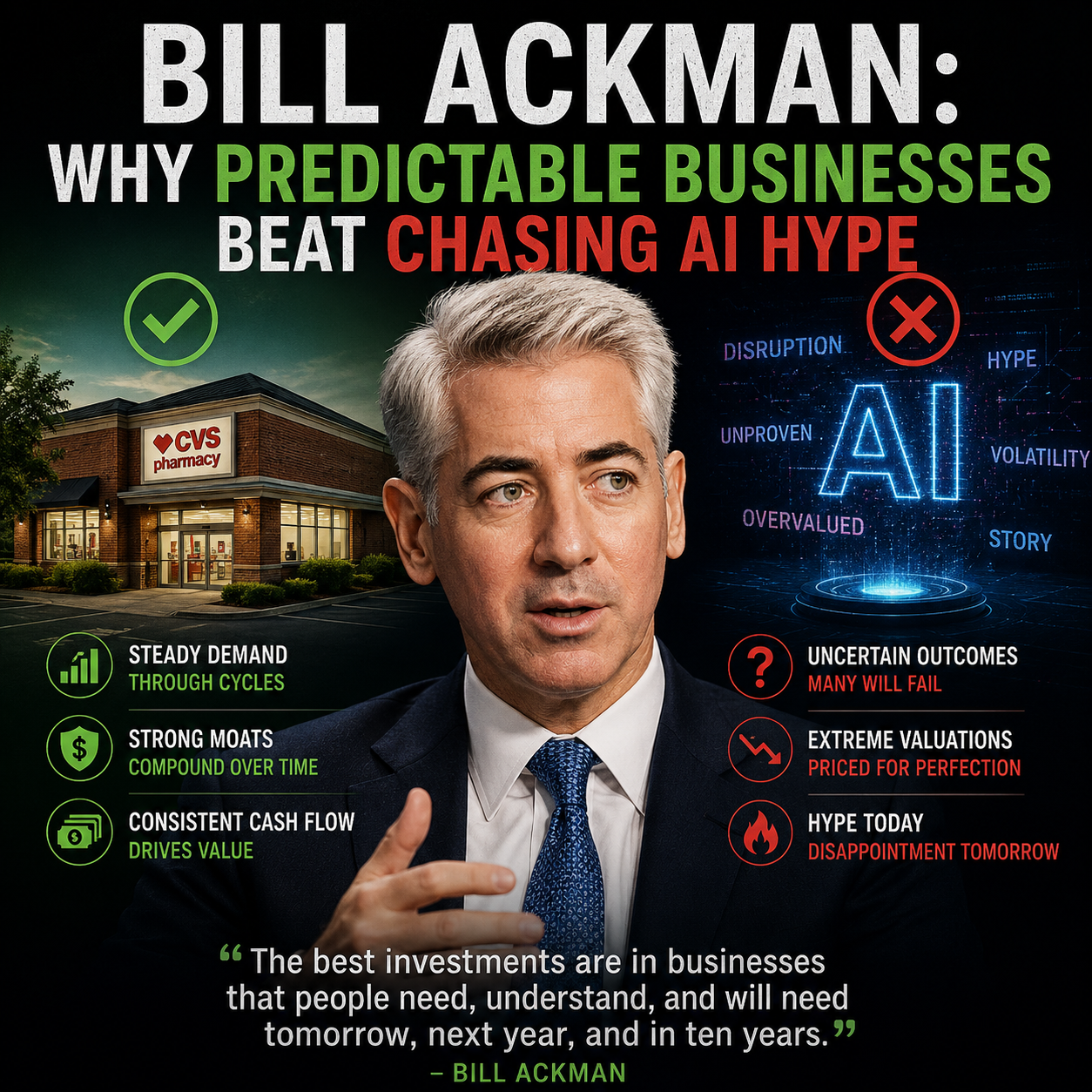
While investors continue debating whether artificial intelligence has created another speculative bubble, Bill Ackman approaches the market from a different perspective. Rather than attempting to predict short-term winners, his focus remains on identifying businesses capable of compounding value over many years, regardless of market sentiment.
That philosophy has become increasingly relevant as enthusiasm surrounding AI, data centers, semiconductors, and next-generation technology continues driving significant capital into a relatively small group of companies. Although Ackman is optimistic about the long-term impact of artificial intelligence, he draws an important distinction between believing in a technology and overpaying for exposure to it.
As he explains, “Our strategy is to construct a portfolio of the best durable growth companies in the world, acquire them at attractive prices, and be a long-term investor.”
That framework naturally steers him toward businesses with durable competitive advantages, predictable cash generation, and management teams capable of allocating capital effectively.
It also explains why Pershing Square owns companies such as Microsoft while avoiding many of today’s more speculative technology names.
Ackman believes Microsoft combines exceptional business quality with unusually attractive valuation. More importantly, its future earnings remain easier to forecast than many of its peers despite rapid changes across the AI landscape.
His broader investment philosophy centers on predictability rather than excitement. “Our portfolio is comprised of businesses where we with a very high degree of confidence can predict the cash flows over a very long period of time.”
That mindset also shapes his view of today’s AI investment cycle. Unlike some investors warning of an imminent collapse, Ackman sees meaningful differences between the current environment and previous technology booms.
“I don’t think it’s a house of cards.”
Instead, he argues that spending on compute infrastructure reflects genuine long-term demand. While predicting the ultimate winners among large language models remains difficult, he believes the underlying investment in computing capacity is supported by powerful economic fundamentals.
At the same time, Ackman remains disciplined when evaluating highly popular stocks. Whether discussing Tesla, Nvidia, or rapidly appreciating sectors such as space technology, his concern is less about innovation than valuation and forecasting confidence.
He summarizes that approach simply: “We prefer to invest in businesses which we can predict with a much higher degree of confidence.”
Perhaps the clearest illustration of his philosophy is the test he applies before making any investment decision. “We invest… one way to think about it as if the stock market might close tomorrow for a decade.”
That perspective removes much of the noise created by quarterly earnings, momentum trading, and changing market narratives. Instead, it forces investors to ask whether they would still be comfortable owning the underlying business years into the future.
As enthusiasm surrounding AI continues to dominate markets, Ackman’s comments serve as a reminder that long-term investment success depends less on chasing the newest trend and more on owning exceptional businesses purchased at sensible prices. Even in rapidly evolving industries, durable cash flows and disciplined valuation remain the foundation of attractive long-term returns.
Full interview here:
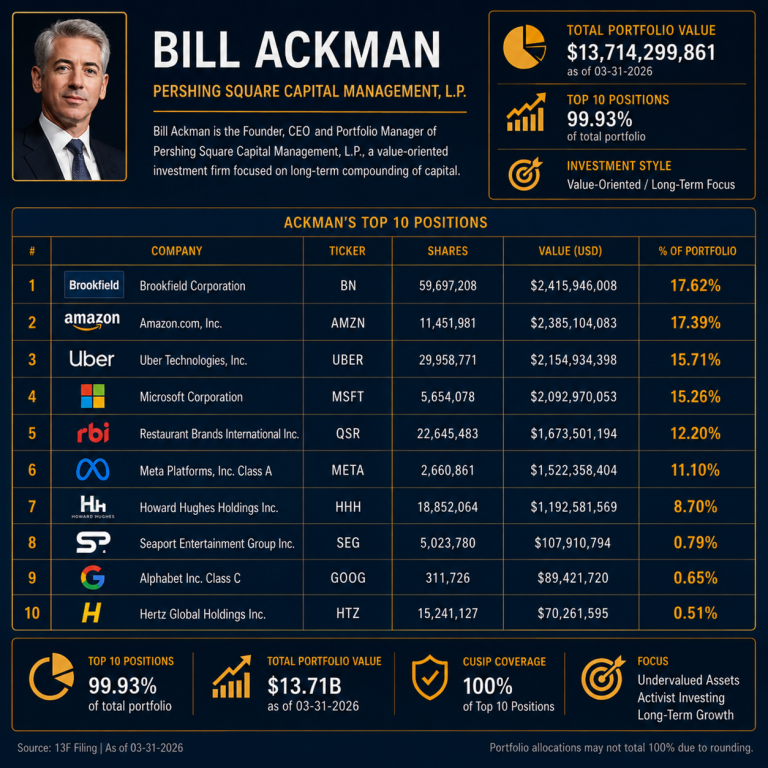 Bill Ackman’s Latest Portfolio: Microsoft Added, Alphabet Slashed
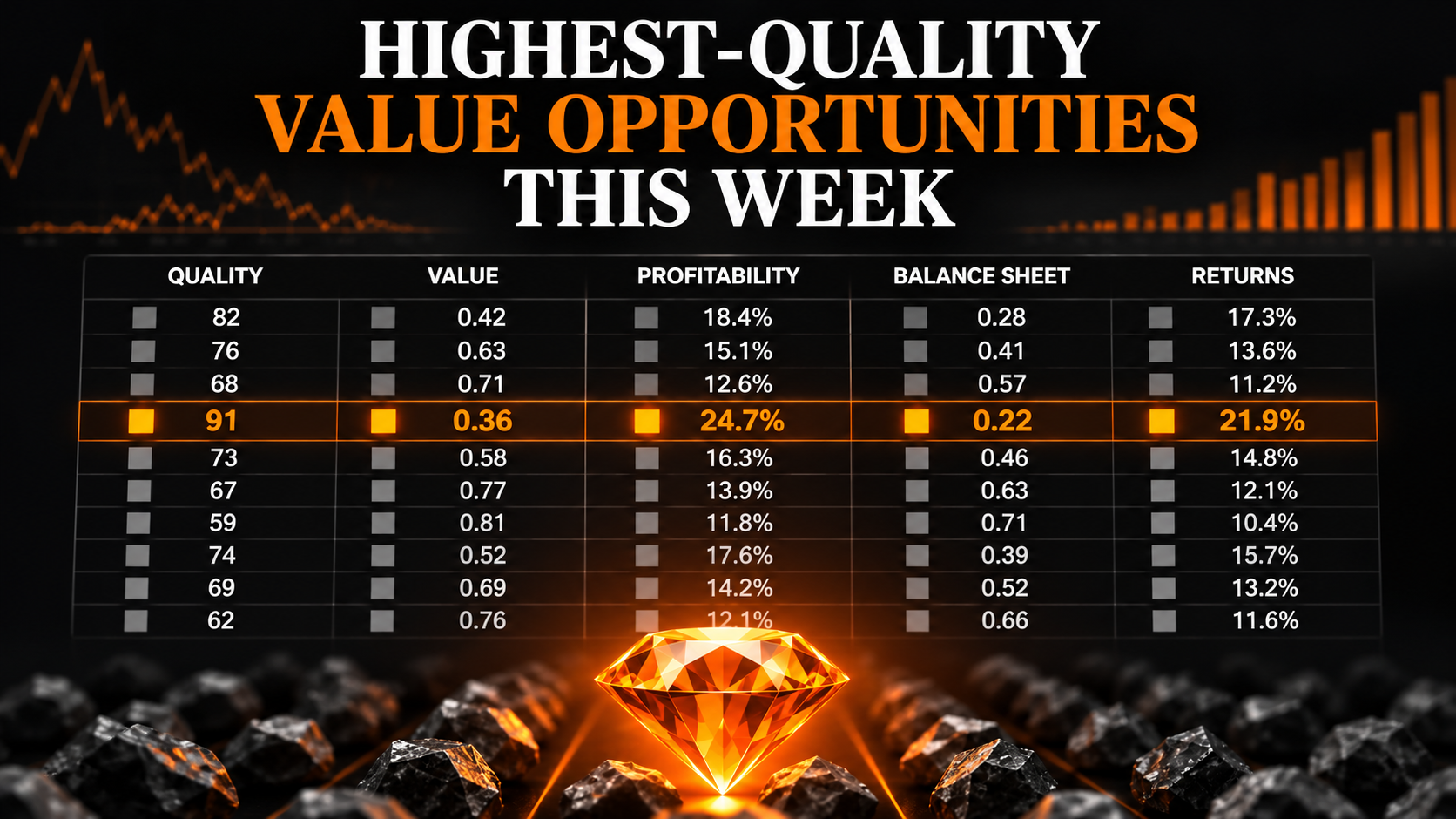 Where Are the Highest-Quality Value Opportunities This Week?
 AI Spending Boom: Are Big Tech Companies Taking on Too Much Debt?