
Jeremy Grantham: Don’t Own US Stocks!
Tuesday, June 30, 2026 · Johnny Hopkins
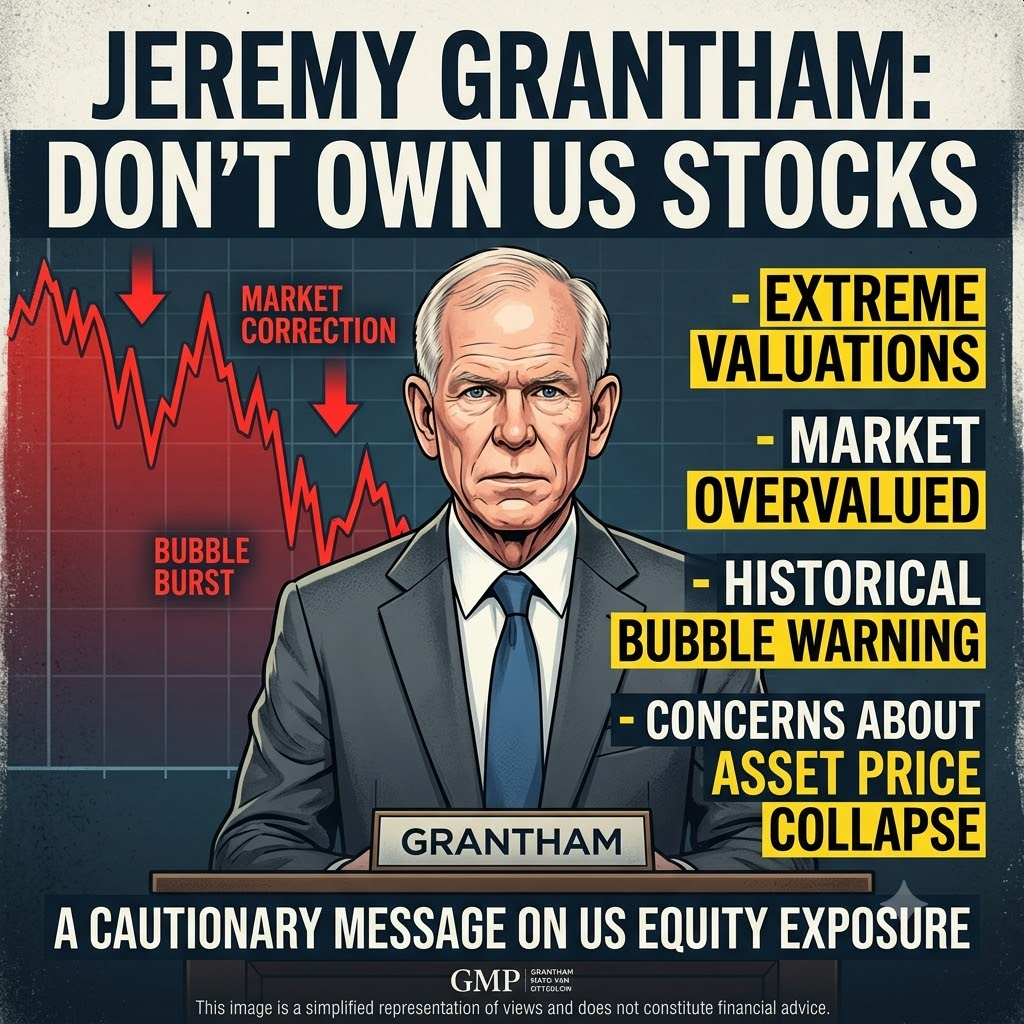
Investor enthusiasm has rarely been stronger. Artificial intelligence continues to dominate capital allocation, corporate spending, and market leadership, while investors increasingly assume today’s winners will continue extending their advantages indefinitely. During his recent interview with Diary of a CEO, Jeremy Grantham argues that this pattern is familiar, not exceptional.
As Grantham explains, “The great bubbles always occur around the very most important ideas.” Rather than dismissing AI as a passing fad, he views it as a transformative technology comparable to the railroads and the internet.
The distinction, however, is that technological revolutions and successful investments are not always the same thing.
History suggests investors frequently overpay for exceptional innovations. Grantham points to previous episodes where genuine breakthroughs ultimately reshaped economies, yet shareholders still endured devastating losses after valuations became detached from reality.
As he notes, “The greater the idea, the more obvious the idea, the more money goes in and the bigger the bubble and the bigger the bust.”
That perspective stands in sharp contrast to today’s widespread confidence surrounding the largest technology companies.
Valuations have expanded alongside enormous capital expenditures, with investors rewarding companies expected to dominate the next phase of AI development. Grantham believes that optimism has reached dangerous levels.
His assessment is unambiguous: “This is I think the biggest investment bubble in American history.”
Whether that proves correct remains uncertain, but his broader point deserves consideration. Markets have repeatedly demonstrated that periods of exceptional optimism can persist far longer than expected before reversing.
Timing those reversals is notoriously difficult, yet valuation has historically mattered over longer investment horizons.
Grantham also believes investors consistently make the same behavioral mistake. “We think that what is good today will continue being good indefinitely.”
That tendency to extrapolate recent success often produces excessive expectations, particularly when supported by compelling narratives and rapid earnings growth.
Rather than attempting to predict the precise timing of a correction, Grantham advocates preparation through diversification. “Rule number one is always be diversified.”
His preferred allocation includes meaningful exposure outside U.S. equities alongside bonds, cash, precious metals, and selected real estate rather than concentrating portfolios in the market’s recent winners.
His skepticism toward U.S. valuations extends further. “Don’t own US stocks.” While many investors will disagree with such an aggressive recommendation, it reflects his belief that international markets currently offer considerably more attractive long-term valuations.
Perhaps the most enduring takeaway is not a forecast of an imminent decline but a reminder that investor psychology changes far faster than underlying business fundamentals.
Technological revolutions may create enormous economic value over decades, yet the path for shareholders is rarely smooth when expectations become excessive.
For investors navigating today’s market, Grantham’s message is ultimately less about abandoning innovation than resisting the temptation to assume that extraordinary businesses automatically justify any price. History repeatedly suggests otherwise.
Full interview here:
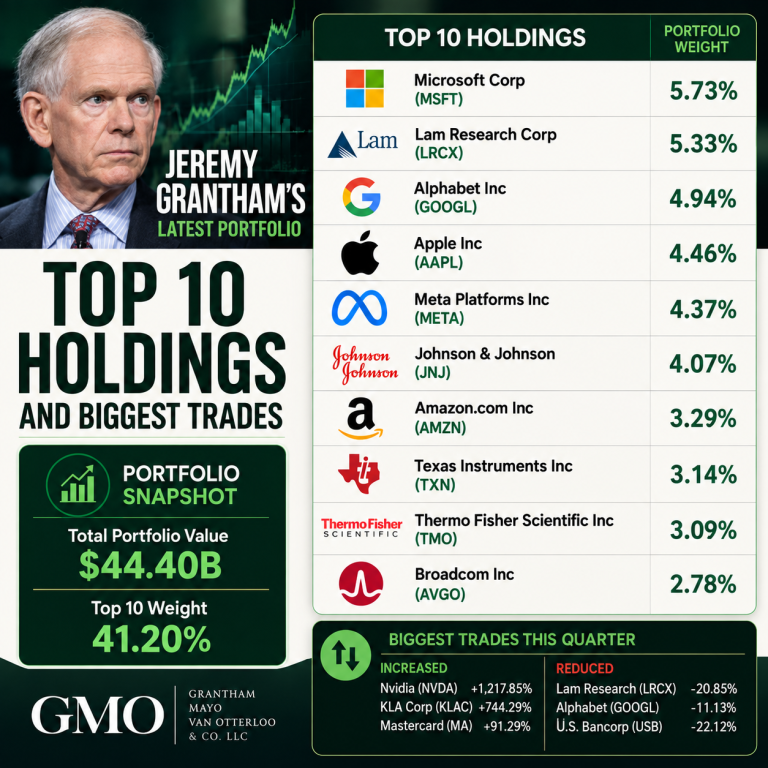 Jeremy Grantham’s Latest Portfolio: Top 10 Holdings & Biggest Trades
 Where Are the Highest-Quality Value Opportunities This Week?
 AI Spending Boom: Are Big Tech Companies Taking on Too Much Debt?