
Jeremy Grantham: Distinguishing Great Technology From Great Investments
Wednesday, June 3, 2026 · Johnny Hopkins
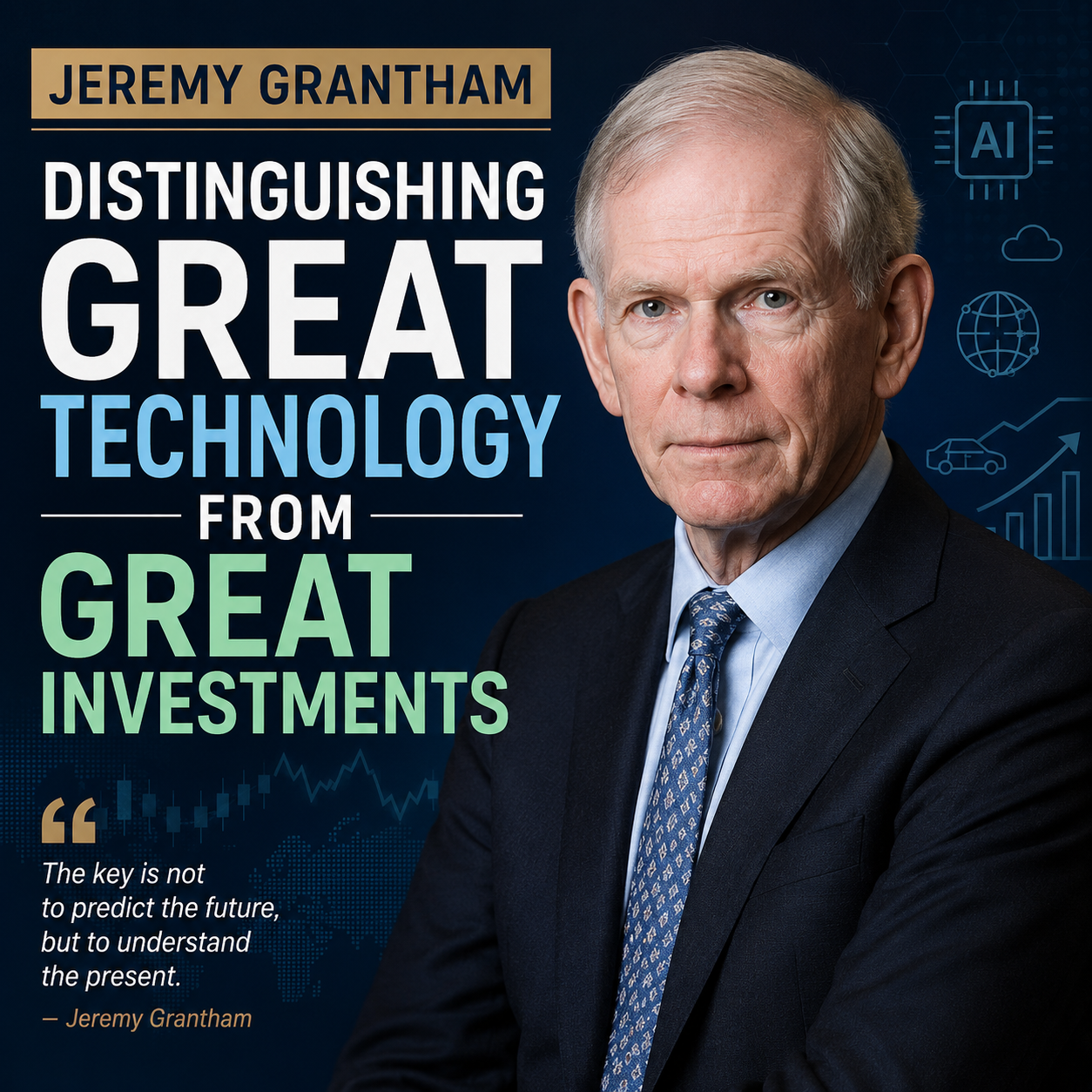
Few investors have spent as much time studying market bubbles as Jeremy Grantham. Over the course of his career, the GMO co-founder correctly identified some of the most significant speculative episodes of the modern era, including the Japanese asset bubble, the dot-com boom, and the excesses that preceded the Global Financial Crisis. Today, Grantham believes investors are once again confronting a familiar situation.
“Starting at the end yes we are in one and have been for some time.”
Speaking in a recent Reuters interview, Grantham argued that current market conditions display many of the characteristics that have accompanied previous speculative periods. While the story this time centers on artificial intelligence, the broader pattern is one he has seen before.
“We entered bubble territory quite a long time ago.”
Unlike earlier bubbles, however, Grantham believes the emergence of AI has fundamentally altered the timing of the current cycle.
Following the market decline in 2022, he expected the correction to continue. Instead, the arrival of ChatGPT sparked renewed investor enthusiasm and helped fuel another powerful rally in technology stocks.
ChatGPT helped trigger “an amazing rally in the in the mag 7 plus or minus a few other companies.”
The result has been an explosion in capital spending, soaring valuations, and a growing belief that AI will deliver extraordinary profits for the companies leading the race.
Grantham is more cautious.
He points out that history’s greatest bubbles were often associated with genuine technological breakthroughs. Railroads transformed transportation. The internet transformed communication and commerce. Yet investors frequently became overly enthusiastic about the opportunities these innovations created.
“A bubble is associated with really powerful real ideas.”
In fact, Grantham argues that the strongest technologies often produce the greatest speculative excesses.
“The more obviously powerful the idea is, the more likely it is to be a bubble.”
His concern is not that AI lacks value. Rather, it is that investors may be underestimating how competition could affect future profitability.
For much of the past decade, many of the largest technology companies benefited from dominant positions within their own markets. Artificial intelligence is different. The biggest firms are now competing directly against one another in what could become a costly race for leadership.
“The way to do really well for a long time, make fat profits, is to be a price setter, which is to say have a monopoly.” That environment may look very different from the one investors have grown accustomed to.
“This could be so unlike the last 10 years as to be shocking.” Grantham also questions the widespread assumption that higher productivity automatically leads to higher profits.
“If everybody has a brilliant new machine, everyone will be productive. No one will make particularly good money.” For investors, the challenge is distinguishing between a transformative technology and the price being paid to participate in it.
As Grantham concluded, “the market is a coincident indicator it is not a predictor of long-term streams of dividends and earnings discounted back, that’s all complete nonsense.”
In a market increasingly driven by AI optimism, that distinction may prove more important than ever.
Full interview here:
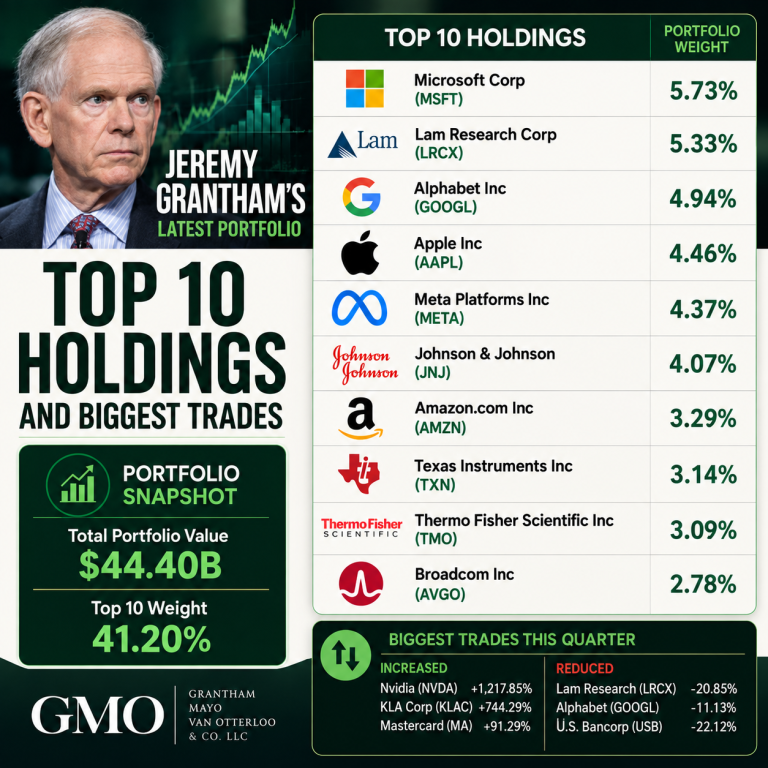 Jeremy Grantham’s Latest Portfolio: Top 10 Holdings & Biggest Trades
 Where Are the Highest-Quality Value Opportunities This Week?
 AI Spending Boom: Are Big Tech Companies Taking on Too Much Debt?