
Howard Marks: Why Investor Psychology Matters More Than Market Predictions
Monday, June 29, 2026 · Johnny Hopkins
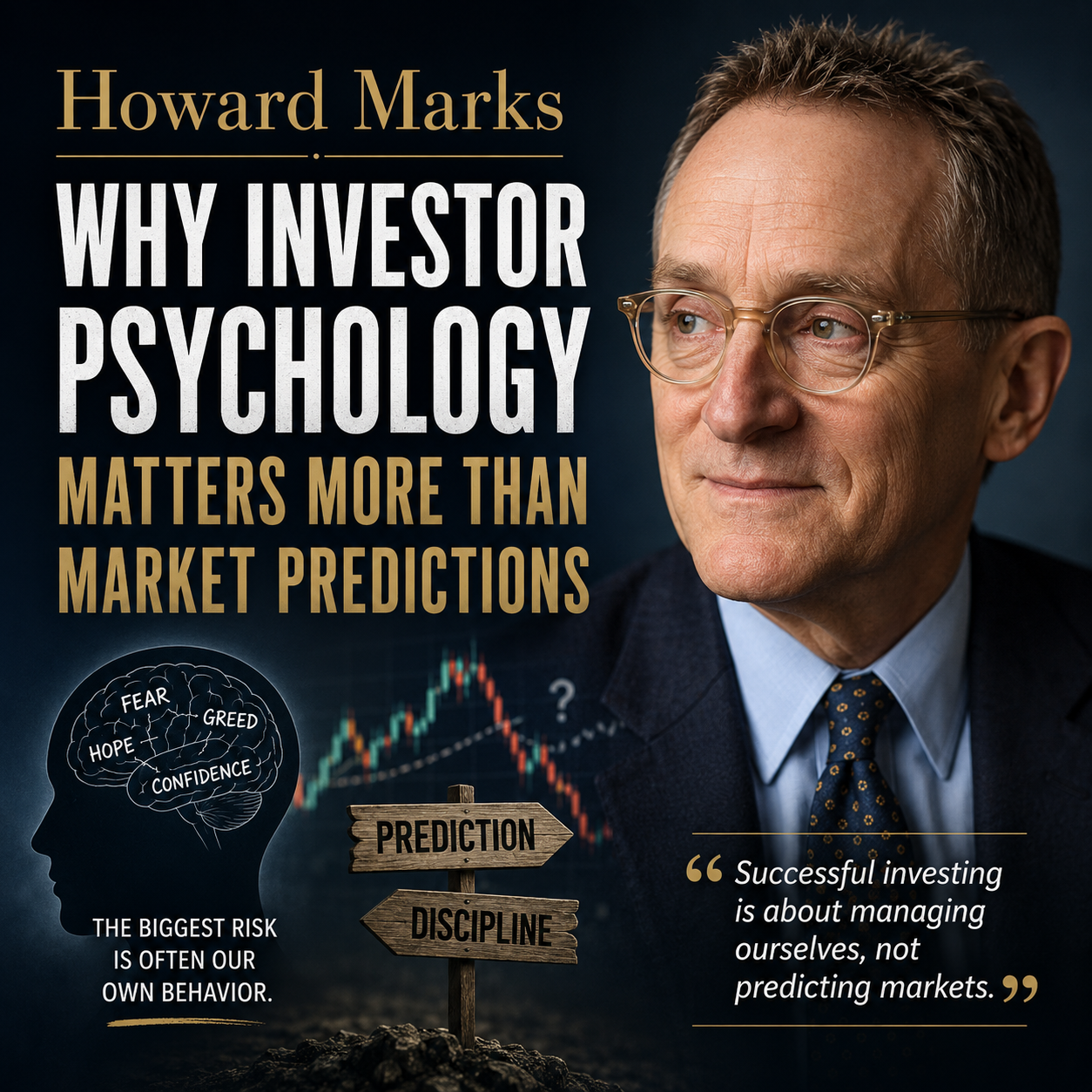
Investors rarely struggle because economic progress stops. More often, they struggle because expectations move far faster than underlying fundamentals. That distinction remains especially relevant as equity indexes hover near record levels while enthusiasm around artificial intelligence, technology spending, and corporate earnings continues to accelerate.
During his recent interview with TBPN, Howard Marks framed the dynamic simply: “a company or a market or an economy makes progress along what we call a trend line.” He continued, “the point is that while the progress there is pretty steady and gradual, sometimes people get too excited and they overvalue that progress and the market goes to an unsustainable high.”
That observation captures today’s investing environment. Strong businesses can justify higher valuations over time, but prices often move well ahead of intrinsic value when optimism becomes the dominant force. Eventually, expectations reset, not necessarily because businesses fail, but because psychology changes.
As Marks explained, “the price fluctuates wildly around that trend line and the main reason is the fluctuation of psychology.”
History suggests those psychological swings never disappear. Markets evolve, industries change, and new technologies emerge, yet investor behavior remains remarkably familiar. Marks referenced the enduring nature of these cycles by noting, “history does not repeat, but it does rhyme.”
Today’s AI boom has obvious similarities to previous periods of technological excitement. Marks acknowledged the extraordinary pace of innovation, saying, “the power of AI relative to the predecessor technologies I think is vastly higher. The speed of innovation is vastly faster.” At the same time, he cautioned, “I think that the speed at which AI can innovate is faster faster than the speed at which society can adjust.”
That does not necessarily imply an imminent market decline. Instead, it argues for separating excitement surrounding transformational technology from the prices investors are willing to pay for exposure.
Perhaps the greatest danger arrives when optimism becomes so widespread that risk itself appears to disappear. Marks offered one of his clearest warnings: “The scariest thing in the world, the riskiest thing in the world is the belief there’s no risk.”
Periods of broad confidence frequently produce increasingly aggressive positioning, relaxed underwriting standards, and valuation expansion. Those conditions often feel safest immediately before they become most vulnerable.
Rather than attempting to forecast every surprise, Marks prefers focusing on investor behavior. “When everybody else is terrified and wouldn’t touch risk with a 10-ft pole and as a consequence you get highly paid for taking risk, that’s when we turn aggressive.”
That philosophy remains highly relevant today. Investors do not need to predict the next correction or identify every catalyst. They simply need to recognize when optimism or pessimism has pushed prices meaningfully away from underlying value.
The current backdrop offers enormous opportunity, but it also demands discipline. Technology may reshape industries, earnings may continue expanding, and economic growth may persist. Even so, successful investing still depends on distinguishing durable business progress from the emotional swings that repeatedly drive markets beyond reasonable expectations before eventually pulling them back toward reality.
Full interview here: