
Tom Russo On Berkshire Hathaway And The Power Of Long-Term Thinking
Tuesday, May 12, 2026 · Johnny Hopkins
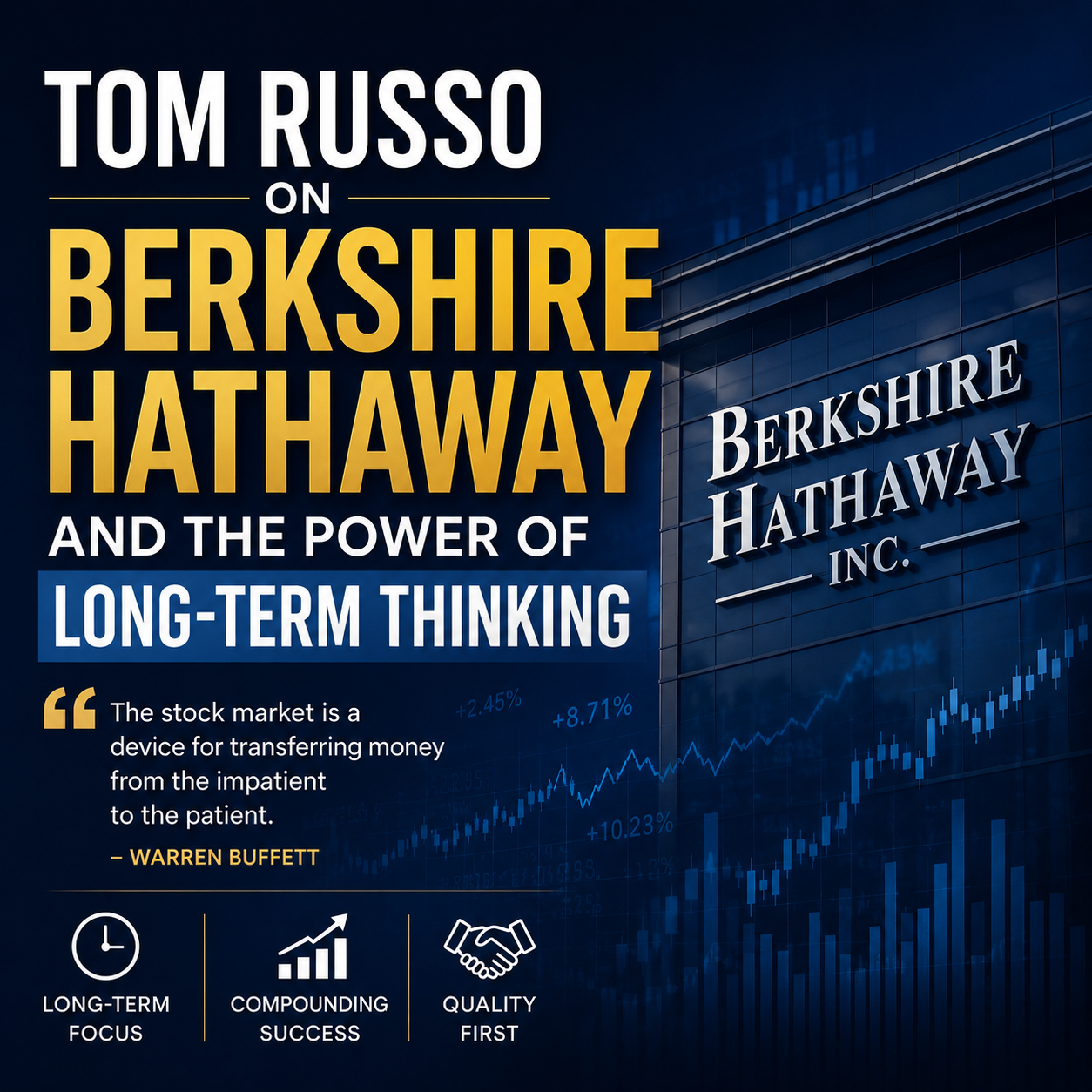
Markets increasingly reward speed, immediacy, and narrative momentum. Capital rotates rapidly between themes, while institutional pressure often forces companies and investors to optimize for quarterly optics rather than long-duration value creation.
Against that backdrop, Tom Russo on the Richer, Wiser, Happier Podcast offered a powerful framework for understanding why some of the best investment opportunities continue to emerge from resisting short-term thinking.
Russo discussed how modern markets increasingly encourage investors and corporations to prioritize immediate results over long-term value creation.
He emphasized the importance of having governance structures and shareholder support that allow businesses to endure temporary periods of weaker reported results while investing for future growth.
“They can’t act long term unless they have the the governance and the and the board support that protects against the um the visit from an activist.”
That distinction matters because many businesses producing meaningful long-term value frequently report weaker near-term earnings while reinvesting aggressively.
Russo pointed to examples where temporary declines in reported profits obscured the strengthening economics underneath the surface.
“The investments spending is really why the the decline was taking place and the other business was actually quite flourishing.”
The willingness to absorb difficult optics is increasingly rare in modern markets. Russo highlighted Berkshire Hathaway’s willingness to withstand years of uncomfortable accounting impacts in pursuit of favorable long-term economics.
“They’re better off for having the structure that allowed that all to take place and for them to be allowed to invest in something that has upfront optics that are troubling when when there’s a sense that the long term is pretty secure.”
Throughout the discussion, the host returned to the concept of delayed gratification as a core investing advantage, noting that “society has however created endless reasons why decision makers mistakenly prefer more jam today even at the expense of jam tomorrow and you said much investment opportunity arises from being able to take the other side of the short termism bet.”
Russo agreed with that characterization and explained how difficult it is to consistently implement long-term thinking in practice.
That philosophy increasingly stands apart from prevailing market behavior. Investors today are often pushed toward rapid decision-making, momentum chasing, and constant reaction to macro headlines, policy developments, and technological trends.
Meanwhile, many durable businesses capable of compounding value over decades can periodically fall out of favor simply because their investments pressure near-term profitability.
Russo also emphasized that long-term investing does not mean blindly holding every position forever. Discipline still matters when facts change.
Reflecting on previous investments, he explained that investors must remain flexible enough to recognize mistakes and act decisively when necessary.
“We guard against the temptation to misthink that just because we said we’re going to stay long-term focused means that we have to stay long term because there’ll be times when we make a mistake and we’re supposed to head for the hills immediately.”
Referencing Warren Buffett’s philosophy, Russo argued that the best investments are often businesses that “allows you to be right once.”
At a time when markets increasingly reward constant reaction, Russo’s broader message remains highly relevant: long-duration compounding often depends less on prediction and more on the ability to tolerate temporary discomfort while underlying business value steadily expands.
Full interview here:
 Tom Russo’s Investing Style: Global Brands, Quality Compounders, Long-Term Value
 Where Is the Deep Value in Small and Micro Caps This Week?
 AI Stock Market Bubble: Can the Technology Succeed While Stocks Crash?