
David Einhorn Says Market Is Ignoring Deep Value Opportunities In Transitioning Businesses
Sunday, May 17, 2026 · Johnny Hopkins
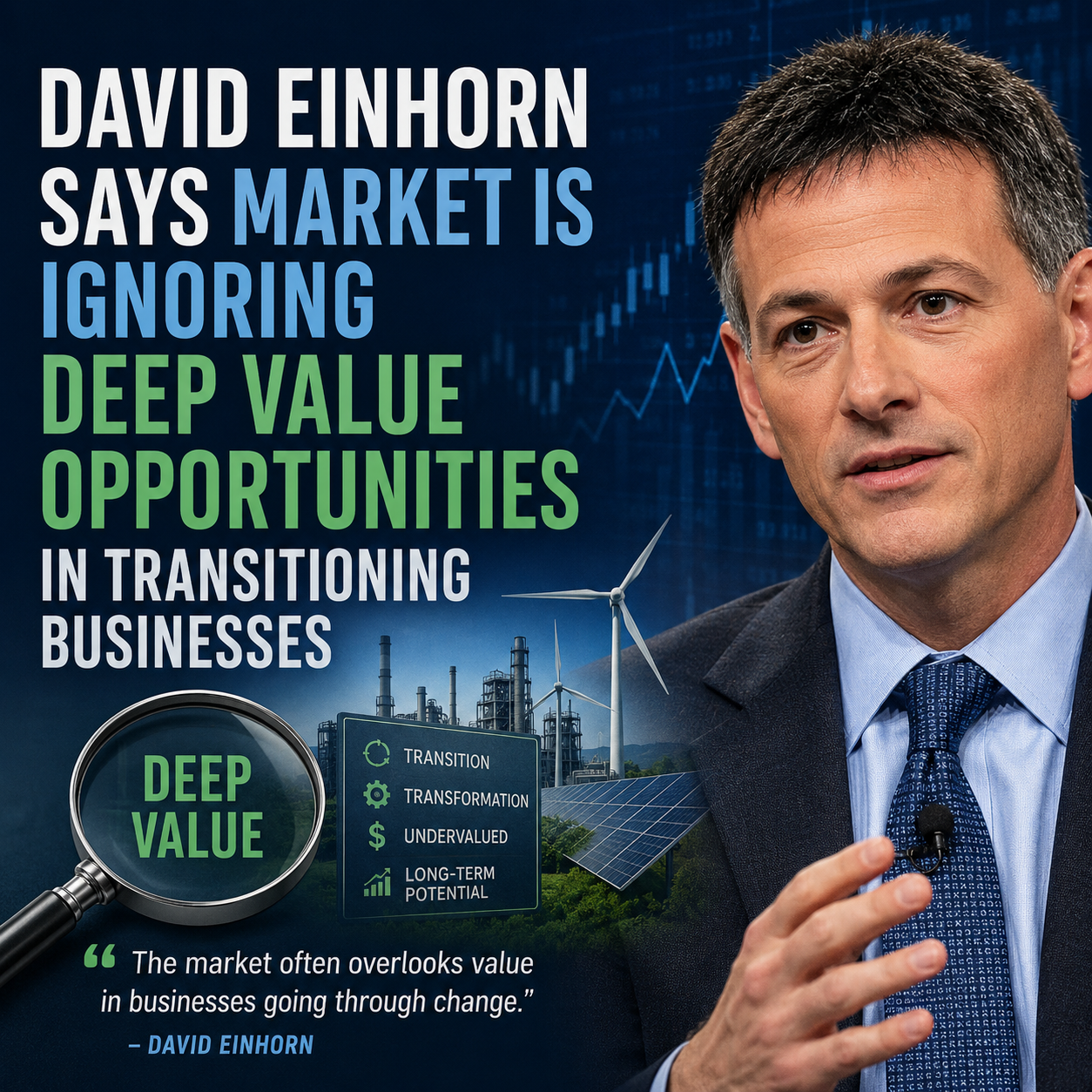
Markets continue to reward momentum, thematic narratives, and perceived certainty, while many businesses undergoing difficult transitions remain deeply discounted. At the recent Sohn Investment Conference, David Einhorn argued that some of the most compelling opportunities today are hiding inside companies investors have largely abandoned.
Einhorn opened by observing that, “While the market appears expensive in the US, we’re finding interesting investments where management is repositioning businesses towards more durable, more disciplined, and more cash generative growth.”
That framing captures an increasingly important divide in today’s market. Capital continues flowing aggressively toward perceived secular winners, particularly anything connected to artificial intelligence, while companies emerging from operational mistakes, cyclical downturns, or reputational damage often trade at valuations that imply little chance of recovery.
Einhorn repeatedly returned to the idea that the opportunity lies in the disconnect between perception and future business quality. As he explained, “The investment opportunity in each instance is the gap between the current perception and the future business quality.”
That dynamic appears across multiple sectors. In healthcare, insurers and providers are still dealing with the aftereffects of inflation, reimbursement pressure, and pandemic distortions.
Einhorn noted that Centene “is dramatically under earning across all major business lines with a straightforward path to margin normalization over the next two to three years.”
The broader message is that many investors remain unwilling to underwrite normalization. Markets have become conditioned to extrapolate current conditions indefinitely, particularly when sentiment has turned negative.
That same skepticism is evident in industrial and infrastructure names. Discussing Fluor, Einhorn emphasized how investors remain anchored to past failures despite a dramatically different operating structure today.
“Investors remain focused on the past and underappreciate Fluor’s exposure to multiple end markets that are each positioned for potential super cycles including data centers, pharma manufacturing, gas power generation, LNG infrastructure, nuclear power, and copper mining.”
Importantly, Einhorn’s thesis is not simply about cheap valuations. It is about transition, management discipline, and capital allocation. Companies that survive difficult periods often emerge leaner, more selective, and more focused on returns rather than growth for its own sake.
Even in media, one of the market’s least popular sectors, he argued that investors may be overstating terminal decline.
Referring to Versant Media Group, Einhorn remarked, “Everyone seems to hate this, which created the opportunity to buy something that has been foresold by non-economic factors, and it is very cheap.”
The current environment increasingly resembles a market that values narratives over balance sheets and durability.
Yet history repeatedly shows that periods of excessive concentration eventually create opportunities elsewhere.
Einhorn’s presentation served as a reminder that some of the best investments emerge not from perfection, but from businesses proving they can change.
Full presentation here:
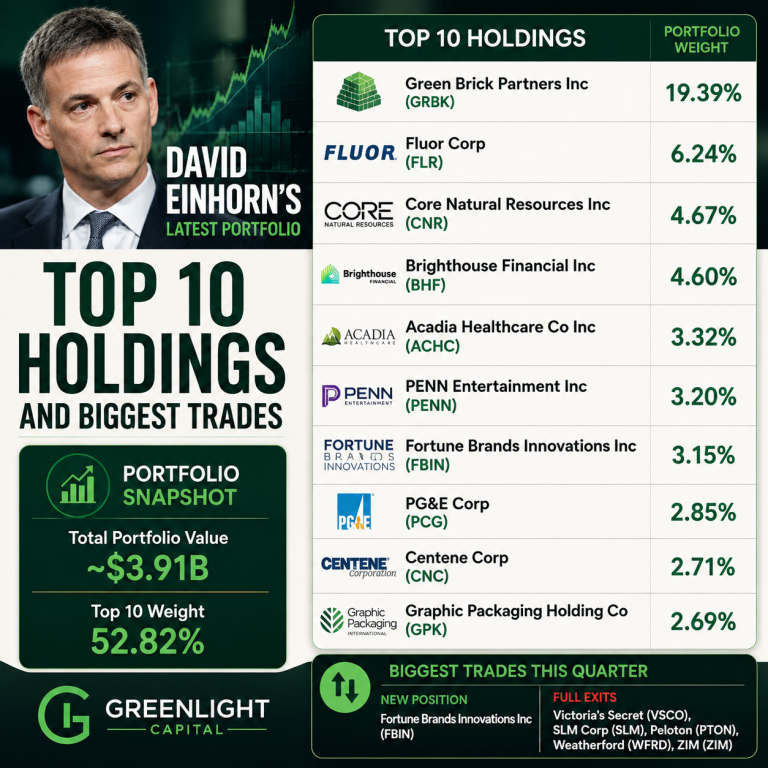 David Einhorn’s Latest Portfolio: Top 10 Holdings and Biggest Trades
 Where Are the Highest-Quality Value Opportunities This Week?
 AI Spending Boom: Are Big Tech Companies Taking on Too Much Debt?