
Jeremy Grantham on Why Bubbles Break and Value Wins
Monday, April 27, 2026 · Johnny Hopkins
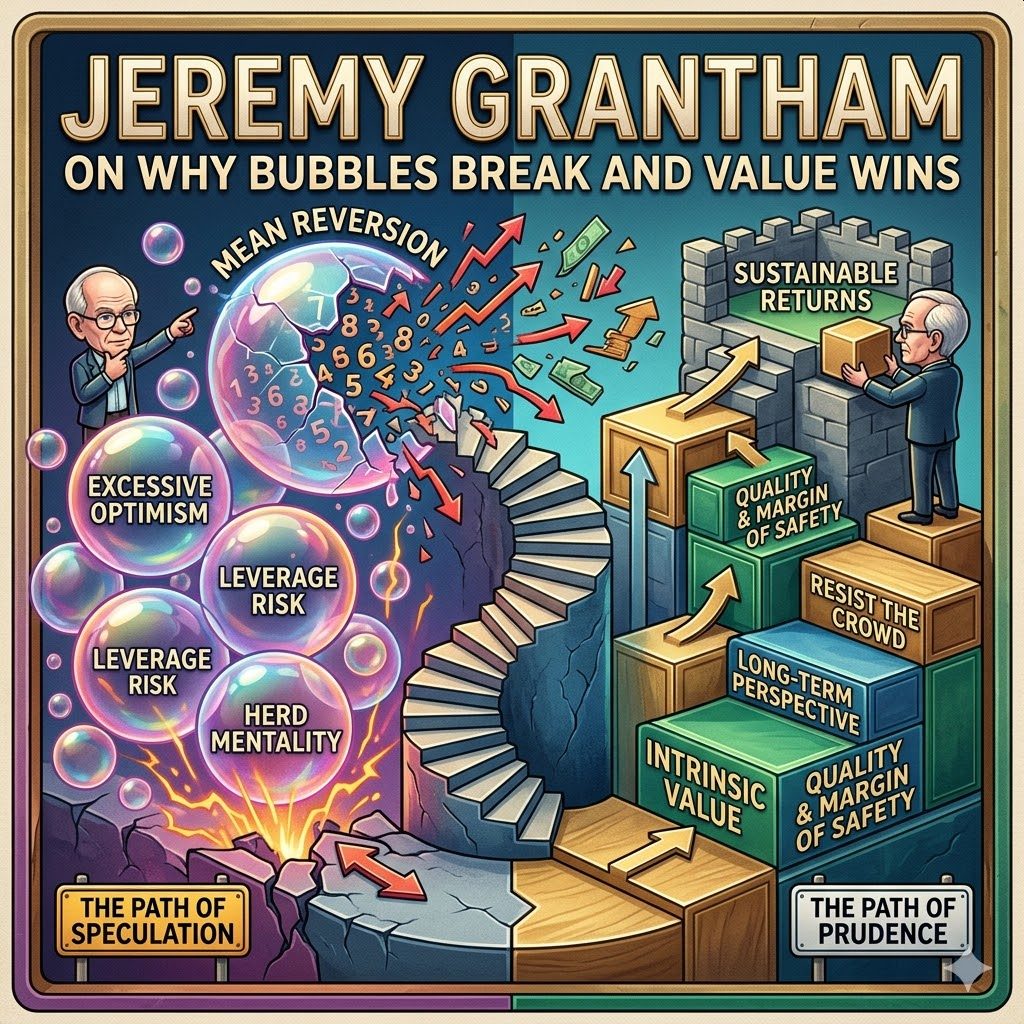
Jeremy Grantham’s long career offers a useful reminder that investing is less about elegant theory than repeated encounters with human behavior. Markets change costumes, but greed, fear, and impatience rarely miss an earnings season. His own framework starts with a plain preference for value: “cheap is better than expensive.” That sounds obvious, yet every cycle proves how quickly obvious truths are discarded when prices start levitating.
What separates durable investors from temporary heroes is not clairvoyance. It is temperament. Grantham describes how early success can distort judgment: “that will do a good job on your brain.”
Anyone who has mistaken a bull market for genius knows the feeling. A few wins become proof of skill, leverage follows, and risk suddenly feels academic. Then the bill arrives.
His best observations concern mean reversion. When assets become detached from trend, the opportunity is often visible long before it is comfortable.
Grantham said the extremes “would stand out like kind of Himalayan peaks in the plane. and you really had to to try pretty hard to miss them.”
That is the challenge of contrarian investing: the signal can be clear while the timing remains brutal. Overvaluation can stretch further than logic suggests, and undervaluation can persist long enough to test careers and marriages alike.
This is why institutional incentives matter. Grantham’s most biting line on professional risk remains essential reading: “never be wrong on your own.”
Managers hugging benchmarks may underperform slowly, but they usually keep their mandates. Those who resist a mania too early can be dismissed before vindication arrives.
For allocators, that means judging process rather than quarter-to-quarter optics. Otherwise, clients systematically fire the very discipline they claim to want.
He was equally blunt about bubbles: “The market is guaranteed more or less to break after a bubble.” That does not mean anyone can ring the bell at the top.
It means stretched valuations carry arithmetic consequences. When starting prices are extreme, future returns tend to disappoint. Investors need not predict the exact date of reversal to respect that math.
Yet Grantham is no permanent pessimist. During crisis, when many were frozen, he argued for action: “you’re not going to call the bottom. That’s not the point.”
The real task is to buy when expected returns are favorable and headlines are unbearable. He urged committees to stop waiting for emotional comfort that never comes.
Perhaps the most valuable lesson is his admission of error after success. He called it “a terrible mistake” not to press harder when probabilities improved after major declines.
Many investors know how to defend in panics; fewer know how to re-risk decisively when conditions turn. That second move often determines long-term compounding.
For today’s investors, Grantham’s message is simple: respect valuation, distrust incentives, survive your own emotions, and remember that patience is often paid last.
Full interview here:
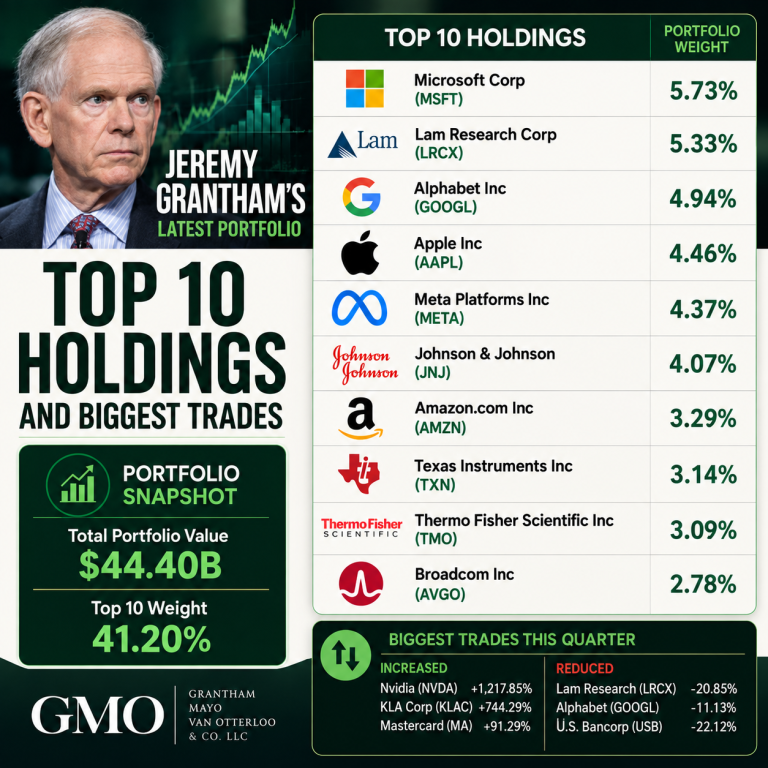 Jeremy Grantham’s Latest Portfolio: Top 10 Holdings & Biggest Trades
 Where Are the Highest-Quality Value Opportunities This Week?
 AI Spending Boom: Are Big Tech Companies Taking on Too Much Debt?