
Howard Marks on Avoiding Losers and Building Wealth Consistently
Tuesday, April 21, 2026 · Johnny Hopkins
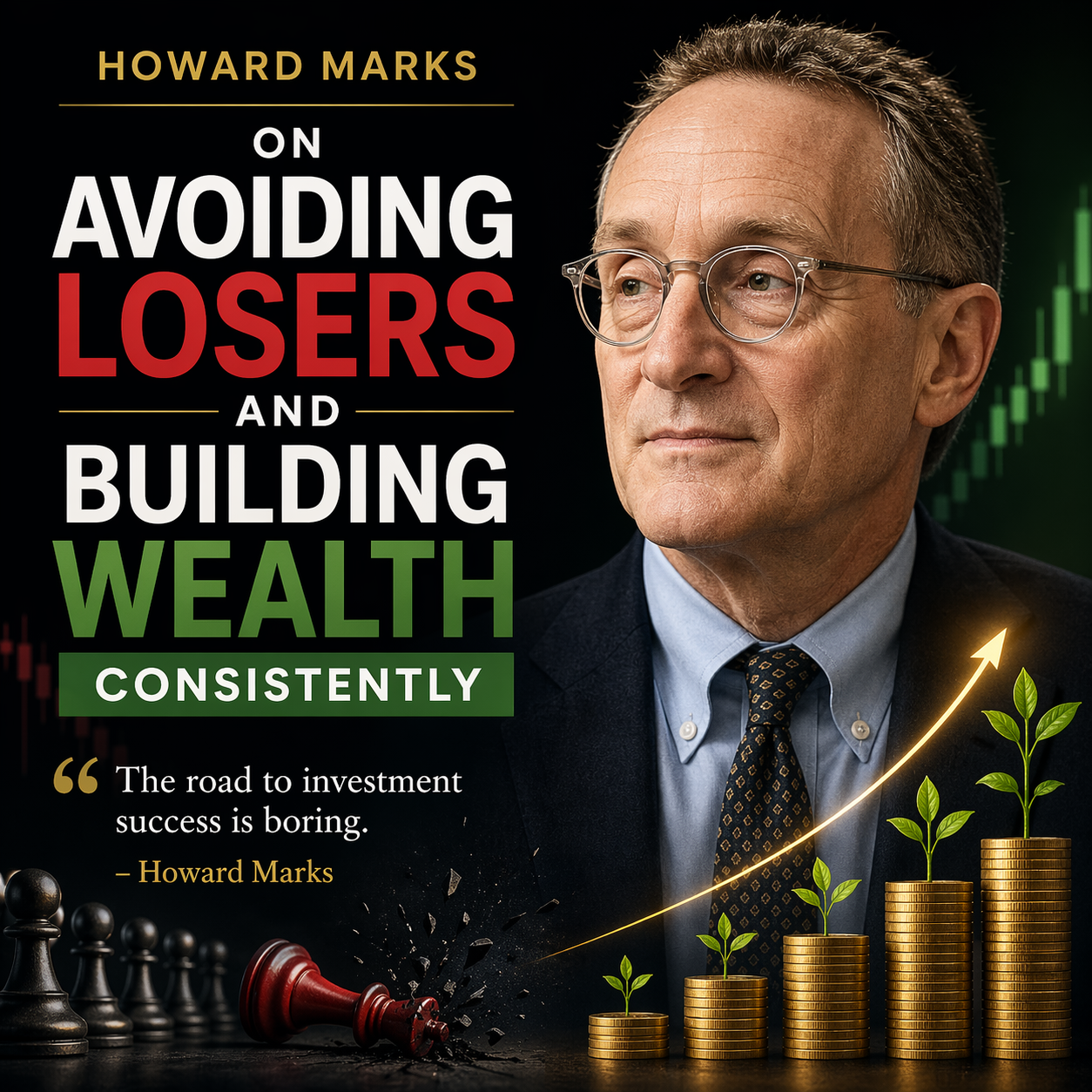
Markets rarely ring a bell before sentiment turns. They drift upward on comfort, then wobble when assumptions meet friction. During his recent interview with the Wharton School, Howard Marks framed that rhythm simply: “The market gets a head of steam based on optimism.”
He added, “Good news is incorporated and causes price to go higher. Bad news is ignored.” Investors who treat momentum as proof often discover too late that price can reflect enthusiasm more than value.
That matters today because expensive assets can stay expensive longer than skeptics expect, yet valuation still anchors long-run returns. Marks put it plainly: “The S&P is not cheap by historical standards. But they are cheaper than they used to be. And that should be encouraging.”
That is not a buy signal by itself. It is a reminder that opportunity improves by degree, not by ceremony.
Too many portfolios are built around the fantasy of perfect timing. Marks has no patience for that chase: “Are we at the bottom? Well, that’s the stupidest question in the world. You never know when you’re at the bottom.”
He follows with the practical conclusion: “And so the only basis for buying is that things are cheap.” Investors waiting for maximum clarity usually pay for it through higher prices.
The deeper lesson is that security selection cannot be separated from entry price. Marks learned this early and never abandoned it: “it’s not what you buy, it’s what you pay that counts.”
He sharpened the distinction further: “Good investing doesn’t come from buying good things. It comes from buying things well.”
That single framework explains why beloved franchises can disappoint and neglected assets can outperform. Quality matters. Price matters more.
It also explains why risk control deserves more attention than prediction. In credit, where upside is capped, avoiding mistakes can be enough.
Marks said, “you’ll get the return you were after.” Then he summarized the operating code behind Oaktree: “Number one is risk control. Number two is consistency.” Many investors seek dramatic wins when steady compounding would do the heavier lifting.
None of this argues for permanent defensiveness. It argues for self-knowledge. Some strategies require concentrated bets and a tolerance for drawdowns. Others reward patience, selectivity, and survival. Marks offered a broader rule that extends beyond finance: “You have to pick your course, but it has to be the right course for you.”
For readers navigating rich valuations, uneven growth, and noisy headlines, the prescription is refreshingly old-fashioned: ignore theatrics, respect cycles, demand a sensible price, and size risk so you can stay in the game long enough for judgment to matter. That may sound less exciting than chasing the next craze. It is also how capital tends to endure.
Full interview here: