
How Mohnish Pabrai’s Mental Models Can Improve Investment Returns
Sunday, April 19, 2026 · Johnny Hopkins
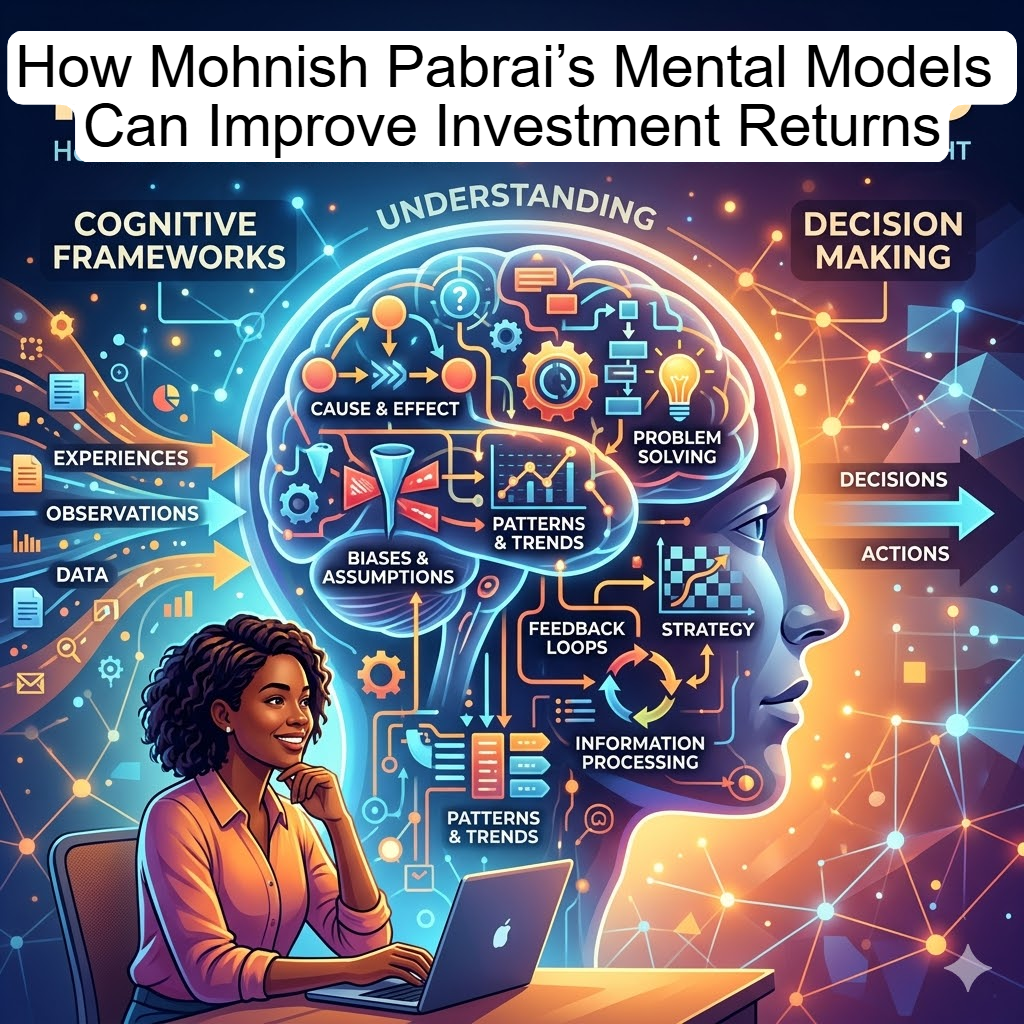
Investors spend endless hours hunting for complexity when many fortunes are built on simpler foundations. That is why Mohnish Pabrai’s remarks to Dakshana scholars deserve attention far beyond a classroom audience. His framework is not about forecasting macro variables or chasing fashionable themes. It starts with behavior. As he put it, “take a simple idea and take it seriously.”
Markets regularly reward the rare participant who can hold a clear principle long enough for compounding to do its work. Most people prefer novelty, noise, and constant activity.
Yet durable wealth often comes from repeating a handful of sound actions: buying well, waiting patiently, and avoiding self-inflicted mistakes. Pabrai’s phrase is deceptively small, but it captures the gap between knowing and doing. Many investors can recite sensible rules; far fewer reorganize their conduct around them.
He then moves to motivation, where many portfolios quietly fail before a single trade is placed. “We are here to do our duty. We are not here to seek rewards or benefits from that duty.”
In markets, obsession with immediate payoff usually produces overtrading, leverage, and emotional decisions.
A duty-focused investor studies businesses carefully, allocates rationally, and accepts that outcomes arrive on their own schedule. The scoreboard matters, but staring at it every minute rarely helps.
Pabrai applies the same logic to enterprise creation: “The purpose of business not to make money.” He clarifies that a company exists to deliver “some product or service to humanity that improves lives of humans.”
Investors should treat that as a screening tool. If a business genuinely solves a painful problem, serves customers well, and can widen that advantage over time, profits are a consequence rather than a miracle.
When management talks only about quarterly targets while customers receive little value, caution is warranted.
There is also a lesson in temperament. “Do not engage in self-pity.” Every serious investor eventually meets reversals: drawdowns, mistakes, missed opportunities, or a thesis broken by facts.
The market does not refund tuition. The productive response is review, adaptation, and forward motion. Complaining consumes energy that could be spent improving judgment.
Finally, Pabrai highlights alignment between identity and action: “Inner scorecard, I will do what I love.”
That principle matters in investing because style drift is expensive. If your temperament suits concentrated value investing, copying rapid-fire traders can be disastrous.
If you thrive in systematic approaches, forcing yourself into narrative stock picking may be equally damaging. Success tends to follow strategies an investor can sustain through boredom and stress.
The broader takeaway is refreshingly practical. Ignore theatrics. Find a few sound principles. Follow them longer than others do. In markets, that remains an edge hiding in plain sight.
Full presentation here: