
Terry Smith Takes Aim at Passive Mania and Mega-Cap Valuations
Sunday, January 11, 2026 · Johnny Hopkins
Terry Smith’s latest shareholder letter offers sober context for a year in which quality-focused equity strategies lagged indexes driven by a narrow group of mega-cap tech names.
He states plainly that “outperforming the market or even making a positive return is not something you should expect from our Fund in every year or reporting period” — a reminder that performance dispersion is part of the game when discipline runs up against momentum.
Smith argues that index concentration and the surge in passive flows reshaped return dynamics.
He notes how “the domination of returns by a small group of major ‘technology’ stocks became so pronounced” that simply keeping up required holding the Magnificent Seven at size.
Yet he refuses to play that game, writing “our Fund is a portfolio, not a sectoral bet.”
The challenge, in his telling, is structural rather than cyclical. “The rise of the Magnificent Seven and the AI stocks also had a strong tailwind from the increase in assets held in index funds” and those funds are “far from being passive in any normally accepted sense of the word” because “this makes them a momentum strategy.”
What follows is a broader critique of valuation-insensitive capital allocation. When passive vehicles must buy on market cap alone, “the inflow from such switches pushes up the value of the stocks purchased by an average of five times the amount invested.”
In Smith’s view, this “produces dangerous distortions” and encourages companies to behave as if capital is nearly free. He highlights prior periods where similar assumptions ended poorly: “when bubbles burst they can cause many lost years or even decades.”
Despite the headwinds, Smith is not tempted to chase. “We are not going to do either” — referring to buying everything big or adopting momentum — because “if you want an index fund you can buy one with much lower costs.”
Instead he reiterates the Fundsmith playbook: “Buy good companies, Don’t overpay, Do nothing.”
That discipline remains intact, with portfolio fundamentals still robust. He points out that “the weighted average free cash flow… grew by 16%,” while portfolio holdings continue to generate high returns on capital and significant cash.
Even turnover stayed low at “12.7%,” an important cost advantage in a market where trading has become expensive and often futile.
His closing philosophy is clear: “we intend to continue holding a portfolio of good businesses in the hope and expectation that their strong fundamental returns will shine through into superior share price and fund performance over the long term.”
For investors exhausted by index-chasing narratives, the letter doubles as a reminder that valuation matters, cycles turn, and fundamentals tend to reassert themselves.
You can read the entire letter here:
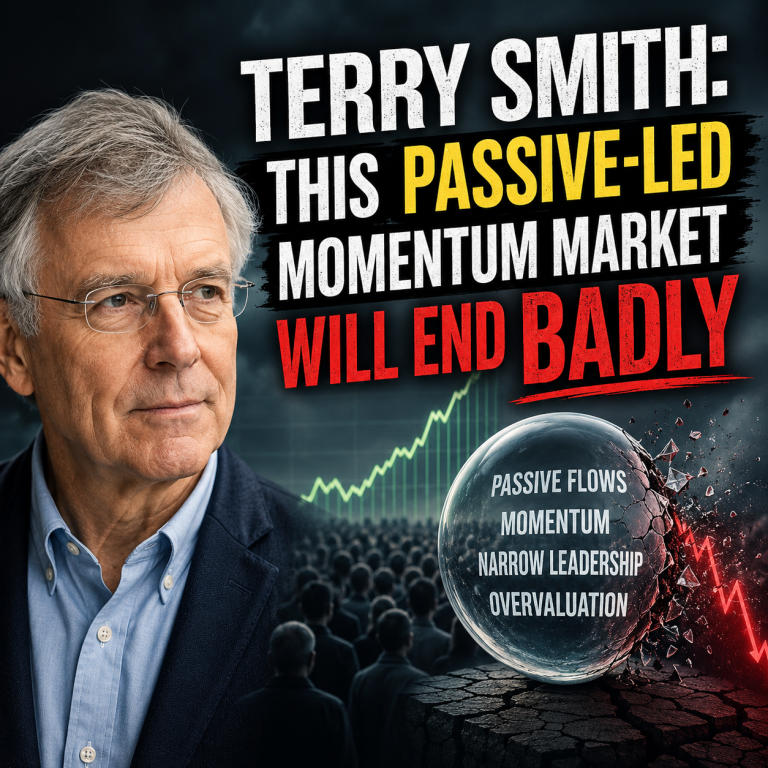 Terry Smith: This Passive-Led Momentum Market Will End Badly
 Where Is the Deep Value in Small and Micro Caps This Week?
 AI Stock Market Bubble: Can the Technology Succeed While Stocks Crash?