
VALUE: After Hours (S07 E41): HHH: Bill Ackman’s Berkshire-Style Experiment or a Value Trap
Thursday, November 27, 2025 · Johnny Hopkins
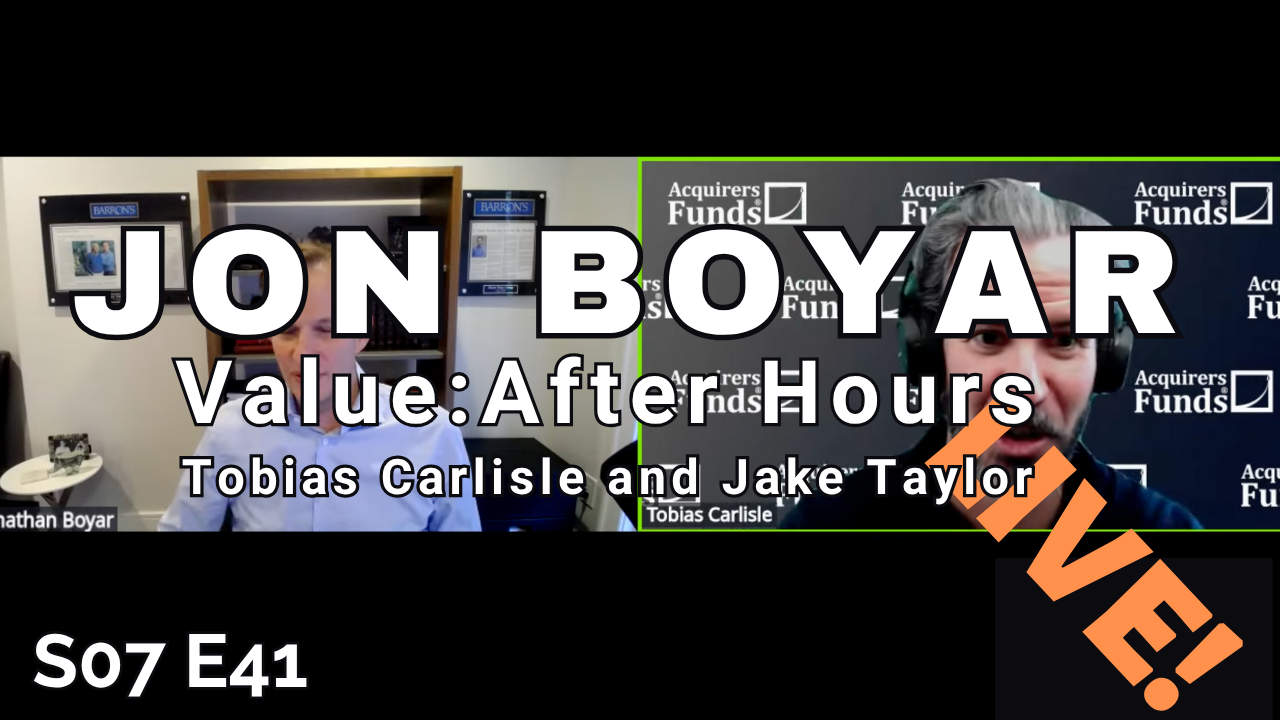
During their recent episode, Tobias Carlisle and Jonathan Boyar discussed HHH: Bill Ackman’s Berkshire-Style Experiment or a Value Trap. Here’s an excerpt from the episode:
Jonathan: Yeah. We’ve looked at it. It’s, at this point, a show me story. Bill Ackman took control of the company. It looks like he’s going to buy an insurance company, and try and turn it into the Berkshire Hathaway model. Who knows? I mean, he’s a great investor. I have a lot of respect for him. Maybe he’ll do it, maybe he won’t. Their traditional master plan community business is doing really, really well. We’re going to have to wait and see to see what Bill buys.
One, for the insurance company, and two, he’s going to use the insurance company to buy common stocks I believe, and also to buy other businesses with the float. The one thing I really like about it is looking at it, there’s really no situation where he makes a lot of money and shareholders don’t. So, that’s something that I think is worth pointing out.
Tobias: He’s got quite a generous compensation plan there. I haven’t looked at it in detail. What is it?
Jonathan: It has something to do with the– I believe it’s from memory, because I wrote a letter– I think was six months or so ago objecting to it. He since toned it down, but basically, they get– I believe some sort of carry. I could be wrong based on how the share price per share value is created. If the stock does well, he’ll make a lot of money. But that’s fine. HHH really was going nowhere fast before he came in, so it’s hard to– Yeah, we’ll see.
You can find out more about the VALUE: After Hours Podcast here – VALUE: After Hours Podcast. You can also listen to the podcast on your favorite podcast platforms here:

 Breaker

 Overcast


 RadioPublic


 Stitcher

 Undervalued Private Credit Investing: Finding Value in Discounted Lending Funds
 Where Is the Deep Value in Canadian Stocks This Week?
 Investing Beyond AI: Why Traditional Businesses Could Still Thrive