Ray Dalio: Bubbles, Busts, and Beautiful Deleveraging
Tuesday, June 24, 2025 · Johnny Hopkins
As investors, we often think in terms of opportunity. But Ray Dalio reminds us that cycles—especially debt cycles—shape those opportunities more than most realize. In his book Principles for Navigating Big Debt Crises, Dalio writes, “Credit is the giving of buying power. This buying power is granted in exchange for a promise to pay it back, which is debt.” And therein lies both the fuel and the fire of the financial markets.
When credit is used productively, “the lender and the borrower will benefit economically.” But when it isn’t? “There’s a good chance that the resources were poorly allocated.”
Dalio knows from experience. “I bet on economic changes via the markets that reflect them,” he says, “which forces me to focus on the relative values and flows that drive the movements of capital.” He adds, “There is nothing like the pain of being wrong or the pleasure of being right as a global macro investor.”
For investors navigating the current market, Dalio’s central point is simple: “Buying something you can’t afford means spending more than you make. You’re not just borrowing from your lender; you are borrowing from your future self.”
This borrowing creates predictable patterns: “The pattern of borrowing, spending more than you make, and then having to spend less than you make very quickly resembles a cycle. This is as true for a national economy as it is for an individual.”
These cycles can last decades. “Most everyone is willing to take on more risk. Quite often new types of financial intermediaries and new types of financial instruments develop… offering higher returns, take on more leverage… All the while, debts rise fast and debt service costs rise even faster.”
And then? “When things are so good that they can’t get better—yet everyone believes that they will get better—tops of markets are being made.”
But Dalio doesn’t just diagnose; he equips. “The key to creating a ‘beautiful deleveraging’… lies in striking the right balance.” Investors must understand how “debt burdens have simply become too big and need to be reduced.”
In that context, being an investor isn’t about optimism or pessimism—it’s about preparation. “Like an experienced doctor who sees each case of a certain type of disease unfolding as ‘another one of those,’” Dalio writes, “you will be better prepared to deal with it.”
Understanding the debt cycle doesn’t just help you avoid mistakes—it helps you time your convictions. Because as Dalio warns, “The greatest depressions occur when bubbles burst.” And that’s when investors must know whether to run—or to buy.
You can get the book as a FREE PDF here:
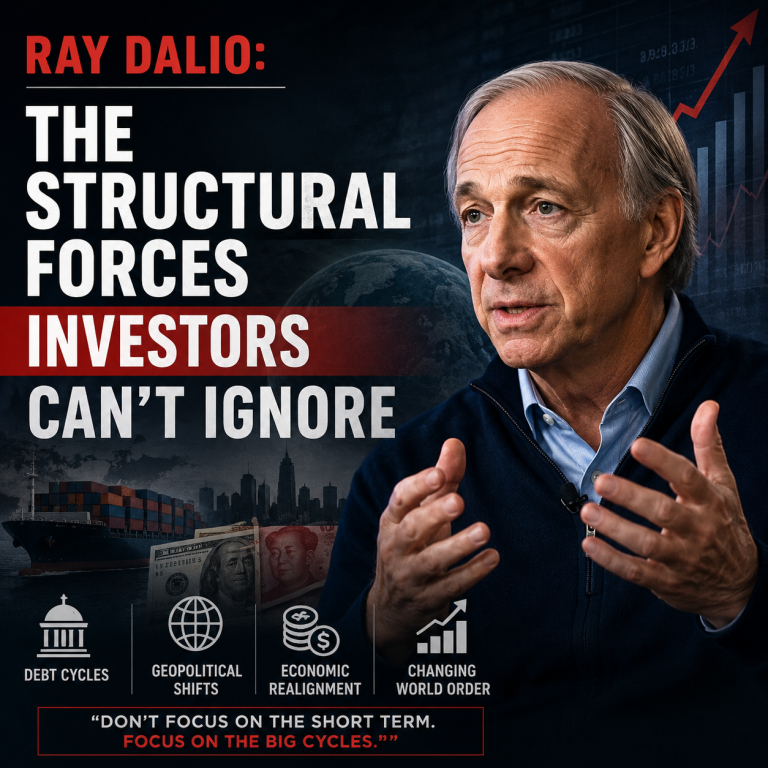 Ray Dalio: The Structural Forces Investors Can’t Ignore
 Where Is the Deep Value in Small and Micro Caps This Week?
 AI Stock Market Bubble: Can the Technology Succeed While Stocks Crash?