
Mohnish Pabrai: Investing With Certainty
Sunday, March 9, 2025 · Johnny Hopkins
When it comes to investing, there’s one fundamental truth: the less certainty you have about future cash flows, the more speculative your investment becomes. Mohnish Pabrai, in his November 2024 guest lecture at Microsoft, put it bluntly:
“So investing becomes more and more speculative and away from what we would call intelligent investing. The less we are able to have convictions and confidence in those future cash flows, the more challenging it becomes.”
In an environment where many investors chase high-flying tech stocks with unclear earnings potential, Pabrai takes the opposite approach.
His focus? Finding investments where the future cash flows are as certain as possible. He illustrated this point with a real-world example from 2004: his investment in IPSCO, a Canadian steel company.
At the time, IPSCO was trading at $40 per share. The company had issued guidance that its cash flow for the next two years would be $15 per share—each year. On top of that, they had $15 per share already sitting on their balance sheet, with zero debt. Pabrai saw an unusually high level of certainty in those cash flows:
“In this case, there was very little uncertainty about the next two years of cash flows because the company was pretty much black and white telling you… These were hard purchase orders with specific time frames for delivery. It was not them making some sales forecast; the sales were already done.”
In other words, IPSCO wasn’t just predicting future sales—it had contractual agreements that made those cash flows nearly guaranteed. Seeing this, Pabrai made a bold move: he allocated 10% of his fund to the stock.
His reasoning was simple—if the company was set to generate $45 per share in cash within two years, buying at $40 seemed like a no-brainer.
And then the magic of compounding returns took over. One year later, IPSCO announced yet another $15 per share in expected cash flow for year three.
The stock, which had been drifting upward, reached $90. Pabrai considered selling—after all, he had doubled his money in 15 months. But before he could act, the stock surged to $155 after a Swedish steel company made a $160 buyout offer.
Reflecting on the experience, Pabrai summarized his approach:
“I don’t particularly try to put a company like IPSCO into a growth bucket or a value bucket or any bucket. It’s just weighing what I’m putting out in cash today versus what I’m hoping to get in cash in the future.”
This mindset—focusing on investments with clear, predictable cash flows—runs counter to the speculation-driven markets of today. Investors often fall into the trap of chasing the unknown, betting on companies with big visions but little certainty in their earnings.
As he put it, “The more I go into high-flying tech names, the more difficult it gets for me to estimate those cash flows in the future.”
Pabrai’s lesson is clear: look for certainty, and the returns will take care of themselves.
You can watch the entire lecture here:
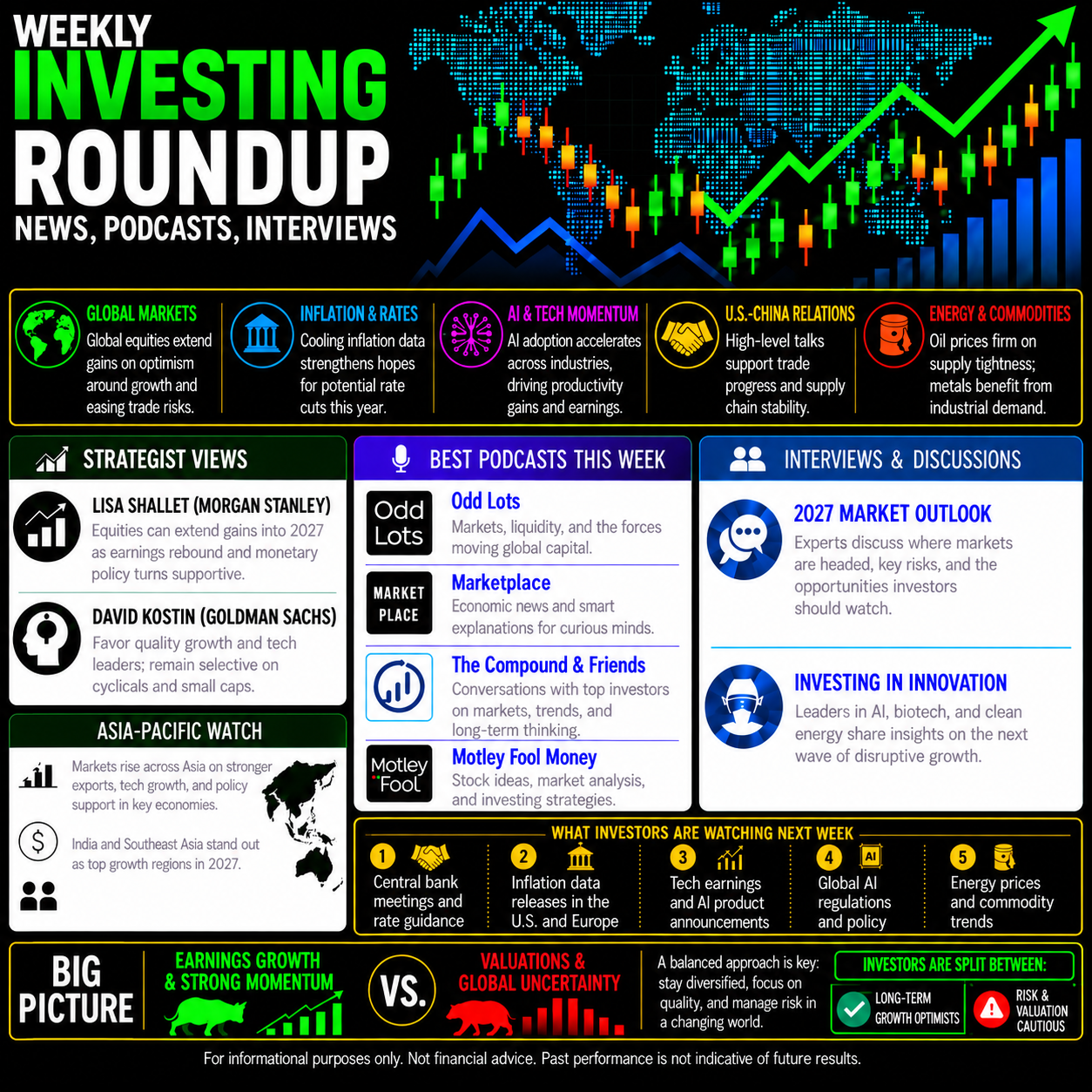 Weekly Investing Roundup – News, Podcasts, Interviews (11/06/2026)
 Netflix Stock Valuation: Is Netflix Undervalued Compared to YouTube?
 Stock Market Valuations: Why Credit Spreads Could Signal the Next Correction